
Rebecca Sonnenshine — of ‘The Boys,’ ‘Archive 81’ and ‘The Housemaid’ — has been waiting since she was ten years old to tell this story. She’s not worried about the discourse.
The premiere of Netflix’s Little House on the Prairie on July 9 marks the closing of a very long loop for Rebecca Sonnenshine. The showrunner, whose credits include writing on The Boys, creating Archive 81 and the recent word-of-mouth hit The Housemaid, has wanted to adapt Laura Ingalls Wilder since she was ten.
So when word reached her that a reboot was moving forward, she went after it hard. What surprised her was that her résumé in horror and supernatural genre television — The Vampire Diaries among it — turned out to be the reason she got hired rather than an obstacle to it.
Sonnenshine says the producers came in somewhat wary but had also floated the idea internally that a genre writer might be exactly what the material needed to give it structure. By the end of the meeting the room had shifted. She recalls them remarking on how much she knew about the source material. She didn’t need to revisit the books to prepare, she says, because they’ve simply never left her head.
Her origin story wasn’t Superman
Having previously worked with Netflix on the since-cancelled Archive 81, Sonnenshine sold the streamer on something considerably larger in scope than the beloved NBC series that starred Melissa Gilbert.
She’s blunt about why she chased it: these were the first books she ever read. She frames them as her origin story, drawing a comparison to the way men so often cite Superman and childhood comics as theirs. The Wilder books, she says, were so visual that they trained her to think in pictures as a kid — a habit she credits with pointing her toward filmmaking at all, and eventually toward writing something like Archive 81.
Putting the Osage on screen
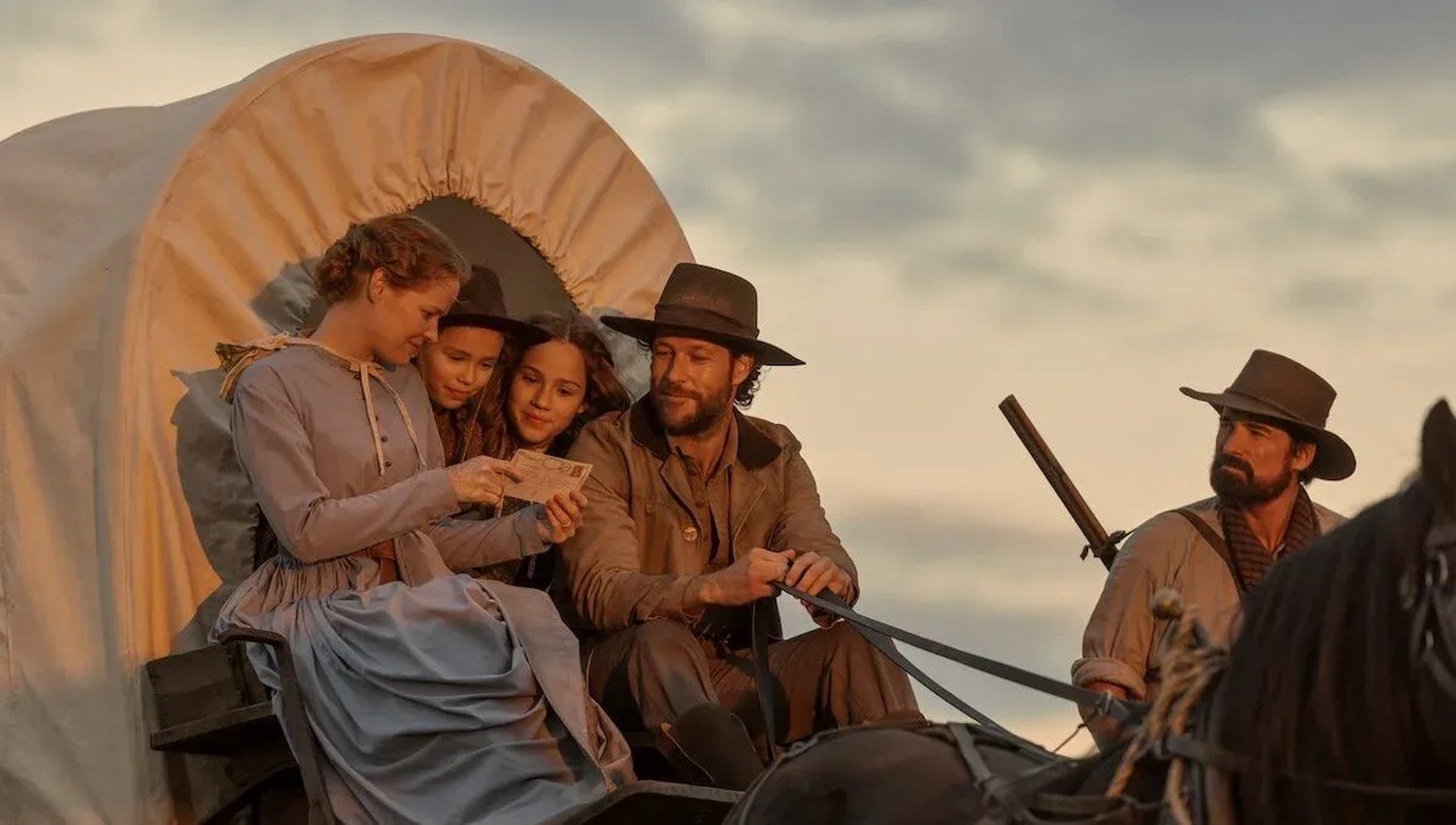
The new series still follows a young Laura Ingalls, played by Alice Halsey, as she and her family leave Wisconsin to build a life in Kansas. Luke Bracey plays her father Charles, Crosby Fitzgerald her mother Caroline, and Skywalker Hughes her older sister Mary.
Where the adaptation diverges most sharply is in its attention to the Osage, the Indigenous nation whose presence runs through Wilder’s original book without ever coming into focus. Sonnenshine’s version introduces the Mitchells, a mixed-race Osage family: William (Meegwun Fairbrother), his wife White Sun (Alyssa Wapanatâhk) and their daughter Good Eagle (Wren Zhawenim Gotts).
Reading the book as an adult, she says, is a different experience entirely — the Osage are everywhere in it, and the reader learns nothing about them. Her solution was to build a family that runs parallel to the Ingalls, an approach that required substantial research and the involvement of story consultant Robert Warrior.
The backlash arrived early
Netflix has already ordered a second season, currently in production. But the project drew fire the moment it was announced in January 2025, with Megyn Kelly posting on X that she would dedicate herself to destroying the show if the streamer made it “woke.”
Melissa Gilbert, who played Laura across nine seasons and 204 episodes between 1974 and 1982, pushed back on Threads. Her point was that the original had already covered racism, addiction, nativism, antisemitism, misogyny, sexual assault and spousal abuse — that there was very little on the modern list of grievances the show hadn’t handled decades ago.
With the premiere now here, the questions have resurfaced, sharpened by the reboot’s heavier focus on the Indigenous communities whose land the Ingalls and other settlers moved onto in late-1800s Independence, Kansas.
Sonnenshine says she’s genuinely unsure what the word means to people now. Her own understanding of it — alertness to social injustice and racial prejudice — makes the objection puzzling to her, and she suspects it has become a catch-all for something else entirely. What she thinks people are actually bracing for is seeing something they loved as children rendered in a way that unsettles them.
Her position hasn’t moved since the beginning: the worry is misplaced. She thinks the issues the show digs into are ones skeptical viewers would find interesting, and she says curiosity about the Mitchells has been the near-universal response from people who’ve watched it. Conservative audiences, in her experience, are genuinely drawn to Native American stories. People are afraid of what they’re afraid of, she says, and that’s fine — but she believes there’s nothing here to fear.
Cozy, yes. Tradwife, no.
Sonnenshine is well aware that part of the show’s appeal lands squarely in cottage-core territory: the handmade, the domestic, the DIY, all of it very much in fashion. The series holds that alongside the genuine brutality of frontier survival — death is never far off — while still finding room for the Ingalls family to assemble a homemade Christmas.
She’d like viewers to enjoy that aesthetic without collapsing it into tradwife discourse. She describes herself as emphatically not a tradwife, but as someone from a family of makers. Her father was a carpenter and a mechanic who built solar panel prototypes, wrote computer programs, kept a garden and raised sheep and chickens, simply because he liked doing things. Her mother sewed her clothes, cooked well, and preserved vegetables — pickling, jam-making, all of it. None of that, in Sonnenshine’s view, should be ceded to a single online identity. She knits and embroiders and bakes and sews herself.
Working with your hands, she argues, doesn’t have to be an all-or-nothing proposition in the digital era. Anyone can open a book and learn to bake, draw or plant something, and none of those skills belong exclusively to tradwives or influencers. Her hope is simply that people ask themselves what small thing they might enjoy making, and find a way to fold it into ordinary life.