

Sweden quietly holds one of Europe’s richer collections of UNESCO World Heritage sites: 15 in total, 13 cultural and two natural, scattered from the far north to the southern islands. Together they tell the story of the country in stone, forest and rock, and most are open for anyone to visit.
The list began in 1991 with Drottningholm Palace, the royal residence outside Stockholm and the first Swedish site to earn the designation. Two more followed in 1993, the Viking-age trading settlement of Birka and the Engelsberg ironworks. In 1994 came two very different entries: the Bronze Age rock carvings of Tanum in Bohuslän, home to the famous “Bride and Groom” carving of an embracing couple, and Stockholm’s Woodland Cemetery, a landmark of modern landscape design.
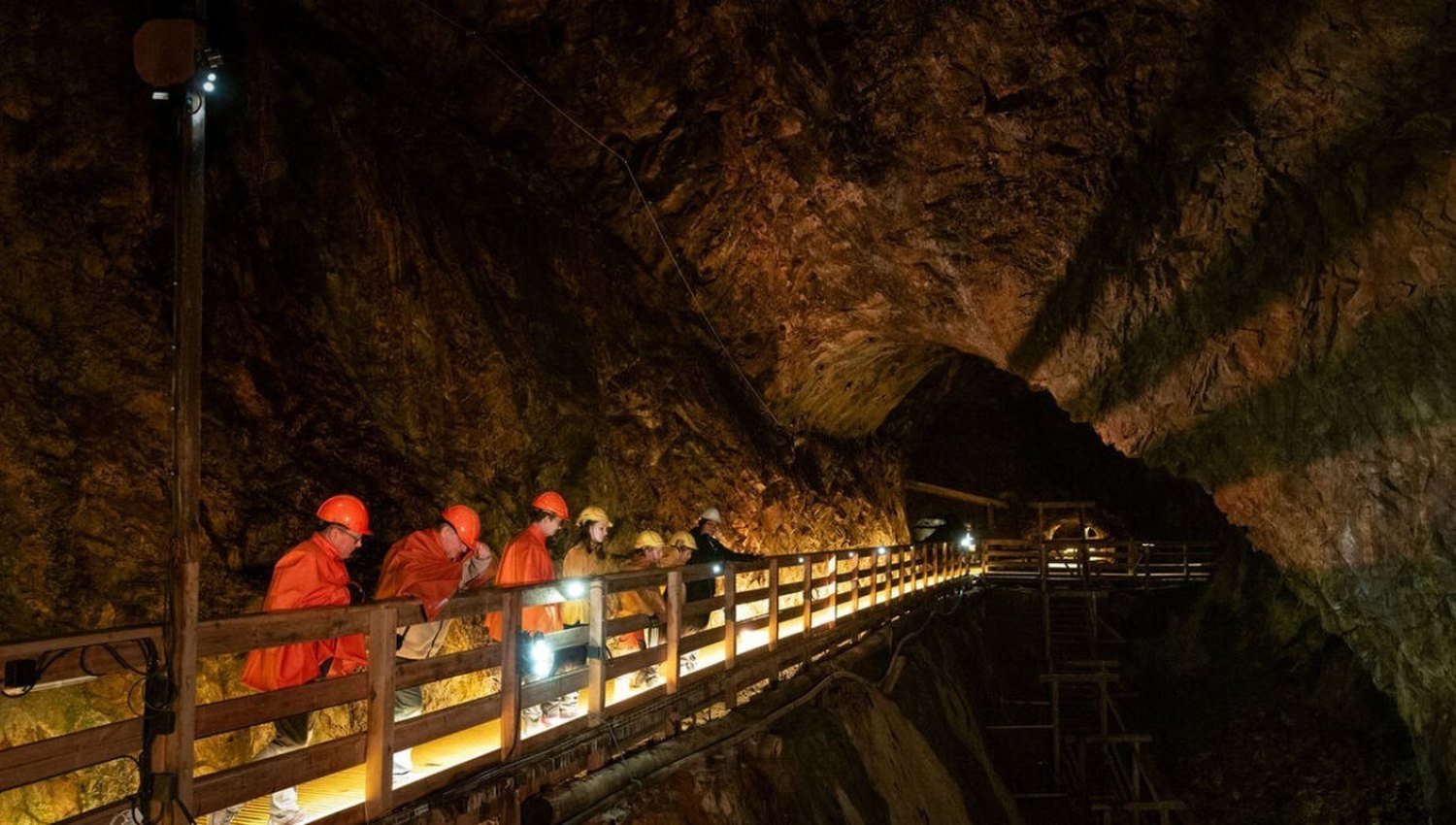
The medieval Hanseatic town of Visby on Gotland joined in 1995, its ring wall still largely intact, followed by the church town of Gammelstad near Luleå in 1996 and the naval city of Karlskrona in 1998. The turn of the millennium brought the agricultural landscape of southern Öland in 2000 and, in 2001, the great copper mine at Falun, the industrial heart that once roofed cathedrals and palaces across Europe. This year marks the mine’s 25th anniversary on the list. As its site coordinator Christina Staberg puts it, descending into the shafts and vast underground halls is a breathtaking experience, a reminder of the grim, smoke-filled world the miners once worked in.
The most recent cultural additions round out the picture: the Grimeton radio station near Varberg in 2004, the Struve Geodetic Arc in 2005, and the decorated Hälsingland farmhouses in 2012. The two natural sites, the High Coast on the Gulf of Bothnia and the Laponian wilderness of Lapland, protect landscapes shaped by the last ice age and by the Sami who have lived there for millennia.
The timing is apt. UNESCO added 25 new sites worldwide this year, from Mount Olympus in Greece to a set of historic Italian theatres, a reminder that the list keeps growing and that competition for a place on it is fierce. Sweden’s 15 have the advantage of being spread across the whole country and, for the most part, easy to reach, which makes them an obvious backbone for a summer of travel. Whether the appeal is a palace, a mine or a stretch of empty coastline, there is a World Heritage site within a few hours of almost anywhere in the country.