


Deepfakes Push Fraud Fighters To Rethink Identity
The tools used to steal identities in North America are changing, and so are the numbers behind them. U.S. consumers reported more than 12.5 billion dollars in fraud losses in 2024, a 25 percent jump from the previous year, with credit card fraud and card-not-present transactions driving a large share of those losses. Card-not-present fraud alone is estimated to have cost about 10 billion dollars in 2024 and now accounts for more than 70 percent of card fraud losses in the United States.
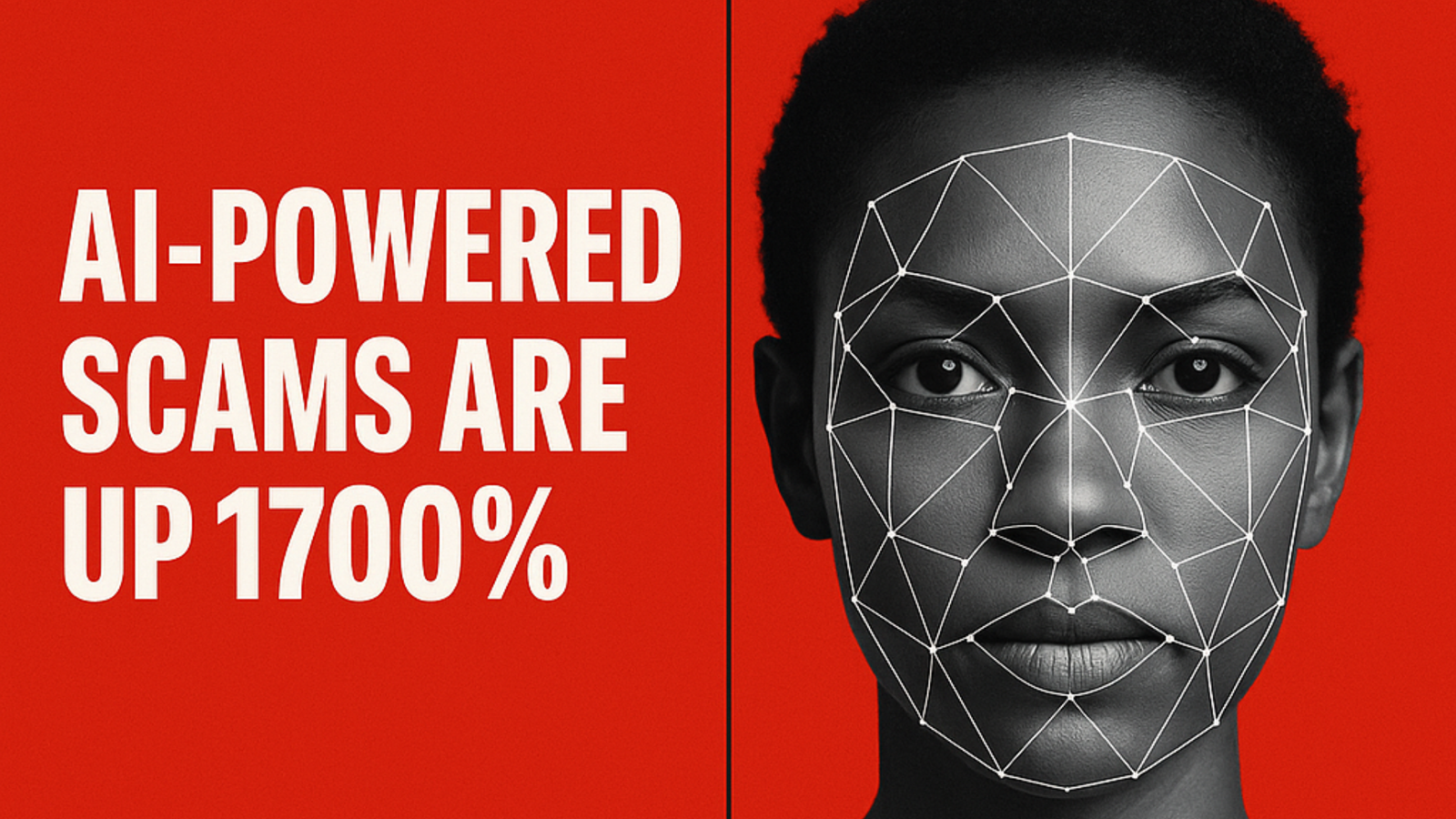
Alongside stolen cards and phishing, deepfake-enabled schemes are gaining ground. One analysis of global deepfake activity estimates that deepfake fraud cases surged 1,740 percent in North America between 2022 and 2023, with overall deepfake files jumping from roughly 500,000 in 2023 to a projected 8 million in 2025. Fraudsters are exploiting face-swapping tools and virtual cameras to manipulate live video feeds and bypass basic liveness checks, particularly during remote onboarding and high-value digital transactions.
Banks and fintech companies are now contending with a dual challenge: detecting traditional card fraud while also identifying synthetic identities built from fabricated data and manipulated media. Synthetic identity fraud is one of the fastest-growing forms of financial crime, with U.S. lenders reporting exposure of roughly 3.2 billion dollars across auto loans, credit cards, and personal loans in the first half of 2024 alone. This shift has pushed biometric verification from a niche security feature into a frontline tool.
CypherFace’s Bet On Facial Liveness In Payments
CypherFace, a United States–based financial technology company founded in early 2024, positions facial verification as a way to tie each transaction to a live, verified individual rather than a set of credentials that can be stolen. It offers a facial biometric authentication application programming interface that businesses can embed in their payment flows so that customers are prompted to verify their faces before a payment or account action goes through.
The system captures a facial scan, converts it into an encrypted biometric template, and applies artificial intelligence–driven liveness detection to determine whether a real person is in front of the camera, rather than a replayed video or a deepfake. CypherFace says encryption occurs at the point of capture and that templates are stored as non-reversible hashes in a controlled environment, meaning raw facial images are not retained or shared with client businesses. Those businesses receive only a pass-or-fail result that they can link to a specific transaction.
The company’s model contrasts with traditional fraud tools that often trigger after unusual patterns appear in transaction data. By placing facial verification before authorization, CypherFace aims to block a charge if the person attempting it cannot be matched to an enrolled profile or if the system detects signs of spoofing. In public statements and case material, it has cited internal testing in which its biometric checks reduced payment fraud risk by more than 99 percent in controlled environments, while acknowledging that outcomes depend heavily on deployment context and user behavior.
Can Facial Biometrics Keep Up With AI-Driven Crime?
The central question for banks, merchants, and regulators is whether technologies like CypherFace’s can keep pace with increasingly sophisticated attacks. Deepfake incidents detected worldwide are estimated to have quadrupled between 2023 and 2024, now accounting for roughly 7 percent of all fraud attempts in some datasets, and fintech is among the most targeted sectors. Security researchers warn that attackers are already experimenting with tailored deepfakes designed specifically to defeat liveness detection, including subtle face-swaps and real-time video manipulation.
Industry specialists suggest that facial verification can still offer an advantage if it is combined with robust liveness checks, device intelligence, and behavioral analytics, rather than used in isolation. Recent surveys of financial services executives show that more than 60 percent have seen a rise in AI-driven fraud attempts and are investing in multi-layered controls that include biometrics. In that context, CypherFace’s model of plugging facial liveness directly into the payment rail reflects a broader shift toward embedding identity checks closer to the point of transaction.
Whether facial verification will outpace deepfakes and stolen cards depends on how both sides evolve. CypherFace’s expansion plans into Canada and Mexico in 2026 indicate that demand for real-time, biometric-based checks is growing in markets with significant fraud exposure. At the same time, recent analyses from banks and cybersecurity firms point to 2025 and 2026 as inflection years for deepfake fraud, with attackers industrializing production and targeting high-value payments. For now, facial verification is not a cure-all, but it is becoming a prominent tool in a contest where both criminals and defenders are leaning heavily on artificial intelligence.