
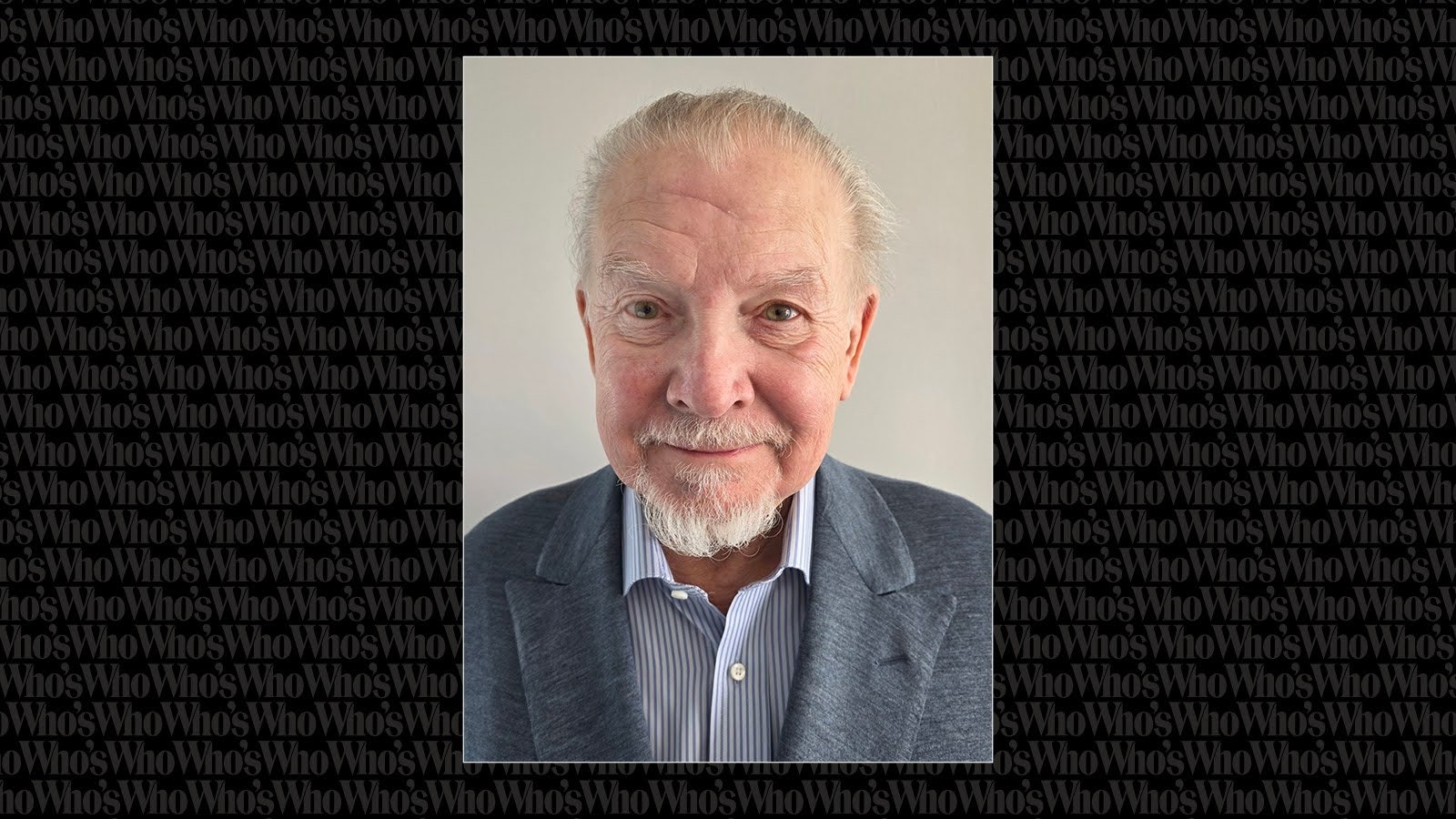


Life seldom offers certainties, but occasionally, a single decision alters the trajectory of everything that follows. This is the story of Gregory E. Moore, whose pivotal choice between two different futures during his senior year at the Massachusetts Institute of Technology would lead to a distinguished career spanning decades in corporate and intellectual property law, as highlighted by in his recent recognition from the prestigious Marquis Who’s Who.
From Astrophysics To The Law: The Crossroads Of A Career
Mr. Moore’s academic journey began with a deep fascination for the cosmos. At the Massachusetts Institute of Technology (MIT), he pursued a Bachelor of Science in Astrophysics, immersing himself in the fundamental laws that govern the universe. However, as his senior year approached in 1973, Mr. Moore faced an unexpected dilemma that would define his professional future.
He shares, “I was a senior at MIT when I found myself torn between two futures, applying to both law schools and physics graduate programs, remaining uncertain until the very last moment.”
Mr. Moore did not lose sight of the weight of this decision, aware. He understood that each path would lead to different careers and societal contributions. While physics offered the allure of scientific discovery and research, law presented opportunities to directly impact businesses,, society, and individuals and society as a whole. lives through legal expertise.
The resolution came from an unexpected source—Mr. Moore’shis mother-in-lawwife’s mother, who recognized qualities in him Mr. Moore that perhaps he had not noticed beforefully acknowledged in himself. “My wife’s mother saw something in me that I wasn’t entirely sure was there,” Mr. Moore mentions. “She believed I would become a strong lawyer, and her confidence, in many ways, gave me the courage to make a leap I might not have made otherwise.”
In 1976, Mr. Moore He went on to graduated from Harvard Law School, graduating in 1976. He focused on banking, corporate, finance and securities law, which allowed him to combine analytical thinking with practical problem-solving skills..
Mr. Moore often references this turning point as one of self-realization and humility. “Looking back, I recognize that being open to influence—listening deeply to the wisdom of others—has been one of my greatest strengths,” he observes.
Mastering Independence: Building A CareerAs A Solo Practitioner
In his final year at Harvard, Mr. Moore metlooked for something to do and found a professor in the applied mathematics department who was an expert on science policy and encouraged him to begin. He started consulting. This led to him contributing to aand ended up on a major big project managed by the Congressional Office of Technology Assessment, in which a panelwhere which convened a panel of eminent individuals convened persons to study the health of R&D establishments in the U.S. In this capacity, Mr. Moore engaged in numerous activities, which included attending hearings and traveling all over the U.S.
Mr. Moore’s career history also includes stints Through this, he was exposed to groundwork, attended hearings, and performed various activities, including a stint in the real estate, and labor and corporate law industriesdepartments, mostly in general corporate law. HeMr. Moore has always been interested in bankruptcy and antitrust, so he specialized in these areasdeveloped interests and specialties, particularly in antitrust law.
Armed with his Harvard credentials and a scientist’s eye for detail, Mr. Moore initially honed his legal expertise at established firms like Ropes & Gray LLP, where he worked in corporate law from 1985 to 2011, where he honed his skills in corporate law, before forging his own starting the independent path. In 2011, he established K Square Law, a solo legal practice specializing in corporate and intellectual property law.
Running an independent practice For Mr. Moore, embracing solo practice has allowed Mr. Moorehim to maintain complete control over his professional approach while providing personalized attention to clients. He cancould focus entirely on his legal expertise without the complexities and overhead costs associated with managing a large staff.
This personalized approach has become a defining characteristic of Mr. Moore’s practice, allowing him to build lasting relationships with clients while maintaining the flexibility to adapt to changing legal environments.
Specializing The specialization in corporate and intellectual property law, has allowed Mr. Moore to uses his technical background from MIT and his comprehensive legal education from Harvard. This unique background combination positions him to understand complex technological and business concepts that often arise in intellectual property matters and , while his corporate law expertise enables him to guide businesses through intricate regulatory and transactional challenges.
The Impact Of A Pivotal Decision
Mr. Moore’s career, however, cannot be captured by his role as an attorney alone. Underpinning Mr. Moore’s his professional decisions are deeply held principles: integrity, service, and a commitment to continual learning. These values not only guide manifested not only in his legal dealings but also his contributionshisin contributions to education and civic life.
Mr. Moore has given back to the community through roles that provided opportunities for stewardship and mentorship. He He served as a board member and treasurer of the Lexington Montessori School from 2004 to 2009, lending his financial stewardship to the educational institution. At the Massachusetts Institute of Technology, heMr. Moore was a member of the MIT Corporation from 2003 to 2008 and served on its development committee for nearly a quarter-century before becoming an emeritus member.
Beyond his professional profile, Mr. Moore has also mentored other aspiring lawyers during his time as an adjunct professor at the University of New Hampshire School of Law (formerly the Franklin Pierce Law Center) in 2014, highlighting. His involvement in education and mentoring highlights his dedication to nurturing future generations of legal professionals. These various roles provided opportunities for stewardship and mentorship, avenues to give back to the communities that shaped his years.
Mr. Moore’s His recognition by Marquis Who’s Who underscores hisacknowledges this holistic approach to professional excellence, which encompassesencompassing technical expertise, client service, and civic responsibility. The honor reflects a career built on the principle that professional success should be measured not just by individual achievement but by the positive impact one has on institutions and communities.
Principles, Legacy And Life Beyond The Law
Throughout his subsequent career, Mr. Moore often referencesd this turning point as one of self-realization and humility. “Looking back, I recognize that being open to influence, listening deeply to the wisdom of others, has been one of my greatest strengths,” he observes.
With decadesThroughout his years in the industry, Mr. Moore acknowledges that change is constant:. He mentions, “There is always something new. If there’s anything that has got people’s attention, it’s artificial intelligence (AI). Everybody’s trying to figure out what to do about it. This is why learning continues. Whether in law, banking, or technology, learning must always be there.”
In his personal lifeOutside his career in law, Mr. Moore enjoysalso spends time on his personal interests, which include skiing, golfing, scuba diving, reading, traveling and attendingand, attending the opera. He cherishes, and spending time with his family, which includes his wife, who is a molecular biologist, and his daughter, who is a former investment banker.
Mr. Moore also maintains involvement engages with cultural institutions such as the Metropolitan Opera and Boston Lyric Opera while lending his support to. He supports the Boston Museum of Fine Arts and the Massachusetts Institute of Technology through various initiatives.
WFinally, when asked about his advice to aspiring lawyersfor young lawyers who undergo the same path as his, Mr. Moore saysemphasizes, “Listen more than you talk.” He notes that For the law experlt, learning to listen carefully is a crucialis crucialan enormously important skill for a lawyer. Llawyers also need to know how to read very carefully.
He concludes, “Success requires hard work. There’s just no getting around that. I worked hard, particularly in my younger days. Take personal risks. Try something new. Do something different. Those are the principal things I say.”