
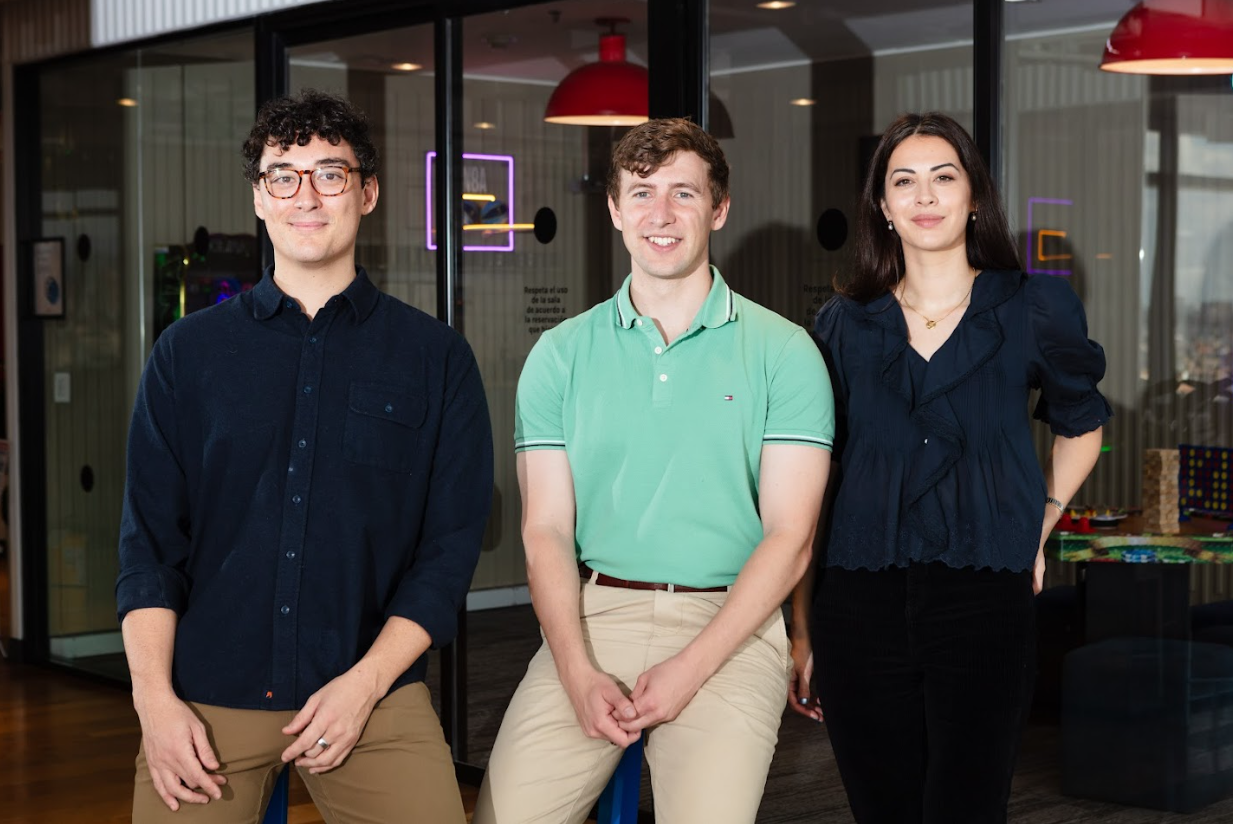


The backpacks served as makeshift goalposts on a Brooklyn field during the pandemic’s darkest months. Lewis Black and Midori Koide had just graduated from universities in the United Kingdom and relocated to New York City, where they met Jeffrey Estes, a University of Connecticut graduate. Together, they discovered what millions of working adults quietly confront each year. The sports they had cherished since childhood had effectively vanished from their lives. Professional responsibilities consumed weekday evenings. Weekend leagues demanded season-long commitments spanning months. Informal pickup games existed somewhere in the city’s vastness, but finding them required navigating fragmented Facebook groups and unreliable text chains that often yielded disappointing turnouts or overcrowded fields.
That improvised match with borrowed equipment became the first test of what would evolve into GoodRec, a platform now connecting over 700,000 players across 68 cities in the United States and Canada. The venture emerged during circumstances that appeared catastrophically ill-timed for launching a business predicated on group athletic gatherings. Yet the pandemic’s isolation paradoxically amplified demand for the exact social connections that organized sports provide. Three years later, the platform orchestrates over 1,000 weekly games spanning soccer, basketball, volleyball, and pickleball while the broader sports technology market races toward a projected $68.70 billion valuation by 2030.
New York has become a crucial testing ground for GoodRec’s expansion and operational model. The city’s geographic sprawl across five boroughs, diverse neighborhoods, and a passionate recreational sports culture presents unique opportunities for the platform. Fields scattered across districts from Brooklyn to Queens to Manhattan require different operational approaches based on local demographics and facility availability. The city’s year-round urban density demands facility partnerships that maintain engagement across all seasons. The Northeast’s recreational league traditions compete directly with the drop-in model that GoodRec pioneered among young professionals and recent transplants seeking flexible participation options.
The Architecture Of Adult Athletic Abandonment
Adult sports participation in the United States has experienced a decades-long erosion that confounds public health advocates and sports industry analysts alike. While 73 percent of American adults report playing sports during their youth, only 25 percent continue to participate in athletics into adulthood, according to research from the Robert Wood Johnson Foundation. The decline accelerates dramatically after college, with participation rates plummeting from 40 percent among 18- to 21-year-olds to just 26 percent among adults aged 26 to 49.
Black and Koide witnessed these statistics manifest through personal experience after moving abroad following graduation. “We are all so busy that it’s hard to organize a game, and so many of us end up losing touch with the sport we love,” Black reflects. That observation understates the compounding friction points that accumulate into insurmountable barriers. Traditional recreational leagues typically require 10- to 12-week commitments with games scheduled months in advance. Team formation necessitates recruiting sufficient players who share compatible availability across extended timeframes. Captains shoulder disproportionate organizational burdens that often fall inequitably on particular individuals willing to coordinate logistics.
The economic dimensions of recreational sports access compound these coordination challenges. Adults from households earning under $25,000 annually participate in sports at a rate of 15 percent, compared with 37 percent participation among those earning $75,000 or more. Traditional leagues that once functioned as democratic athletic venues have either disappeared or transformed into expensive systems that price out middle-income participants. Facility costs, equipment expenses, referee fees, and league administration charges accumulate into barriers that exclude substantial population segments from organized recreational athletics.
Chicago’s recreational sports infrastructure mirrors these national patterns while adding unique regional characteristics. The city maintains extensive park district facilities that offer adult leagues in numerous sports. Yet, these programs struggle with persistent challenges, including inconsistent quality, rigid scheduling requirements, and geographic accessibility barriers. Participants living in neighborhoods distant from league venues face prohibitive commute times that render evening games impractical during workweeks. The winter months eliminate outdoor options for sports like soccer, forcing participants to either abandon play for extended periods or secure expensive access to indoor facilities.
Building Infrastructure Through Bootstrapped Operations
GoodRec’s operational model addresses friction points that plague traditional pickup sports through a marketplace architecture matching supply and demand across multiple dimensions. Users browse upcoming games through mobile interfaces, filtering by geographic proximity, preferred sports, skill levels, and time availability. Registration occurs through advanced payment processing, which guarantees minimum participant thresholds while eliminating awkward collection efforts. Hosts manage equipment distribution, team balancing, and game administration, creating predictable quality standards that casual pickup games often struggle to achieve.
The founders initially financed operations without external capital by collecting advance payments from participants and channeling those funds directly into field reservations and equipment purchases. “We bootstrapped the company in year one,” Koide explains. “Since people sign up for games in advance on the app, we were able to collect payments before the game and use the funds to reserve the field and buy the equipment for every game.” That approach allowed rapid iteration without venture funding constraints while generating positive cash flow from the first match.
The bootstrapped phase yielded crucial insights about what recreational athletes actually value beyond convenient scheduling. Repeat participation depended heavily on the quality of the host rather than the facility’s amenities or equipment specifications. Users gravitated toward games organized by particular hosts whose personality and organizational skills created enjoyable experiences. Some hosts became local celebrities within the GoodRec ecosystem, with their scheduled games filling up weeks in advance because players trusted the consistently high-quality experience they delivered.
Community formation emerged as an unexpected yet valuable outcome that went beyond mere activity provision. “We love hearing that best friends have met, relationships have started, and group chats have been born through our soccer games,” Black observes. Regular participants attending the same weekly matches developed familiarity and social bonds extending beyond the field. The platform inadvertently created social infrastructure, filling gaps left by eroded community institutions that once facilitated the formation of adult friendships.
Chicago’s facility partnership network demonstrates how GoodRec scales operations while maintaining quality standards. The platform collaborates with venues ranging from municipal park district fields to privately operated indoor sports complexes. Many facilities struggle with utilization rates, particularly during weekday afternoons and weekday evenings outside traditional league hours. GoodRec guarantees baseline revenue streams while absorbing marketing and coordination costs that operators would otherwise bear directly. The arrangement aligns incentives between platform and property owners, as higher participation rates benefit both parties while poor maintenance or scheduling conflicts damage the shared customer base.
Technology Amid A Market Transformation
The sports technology sector stands at an inflection point where massive investment flows toward professional athletics infrastructure while recreational participation languishes. The global market valuation reached $29.74 billion in 2024, with projections suggesting growth to $68.70 billion by 2030, driven primarily by analytics platforms, smart stadium technology, and wearable devices used by elite athletes. North American markets captured 38.5 percent of global spending in 2024, powered by professional leagues investing heavily in data-driven performance optimization and immersive fan experiences.
Yet recreational technology platforms occupy distinctly different competitive terrain. GoodRec competes less with professional sports technology vendors than with fitness studios, traditional recreational leagues, and informal social coordination mechanisms. The target customer seeks convenient access to organized athletic activity rather than elite performance enhancement through biometric tracking or video analysis systems. That positioning limits both the addressable market size and pricing power compared to enterprise sports technology contracts worth millions of dollars annually.
The platform’s technical architecture prioritizes unglamorous reliability over flashy features that dominate sports technology marketing narratives. Payment processing must execute flawlessly across diverse financial institutions. Notification systems must reach users at appropriate intervals without overwhelming them with excessive alerts. Host interfaces must streamline attendance tracking and team balancing without requiring extensive training. Mobile applications must load quickly on older devices used by participants who are unwilling to upgrade their hardware for recreational sports purposes.
The Chicago deployment revealed unexpected technical challenges related to weather integration and seasonal transitions. Outdoor games require cancellation protocols triggered by precipitation forecasts, temperature thresholds, and field condition assessments. Indoor facilities offer weather-proof alternatives, but they require different operational parameters, including participant counts, game formats, and pricing structures. The platform required a flexible architecture that accommodated these variations without fragmenting the user experience across incompatible systems.
Koide emphasizes how technological simplicity often generates more value than sophisticated complexity. “We want to make playing team sports as easy as going to the gym,” she states. The analogy reveals both ambition and limitation inherent in attempting to reduce coordination requirements for inherently social activities. Gyms succeeded by eliminating advanced coordination through drop-in access models that accommodate individual exercise routines. Team sports impose structural constraints that require minimum participant thresholds and balanced skill distributions, which individual fitness activities avoid entirely.
Demographic Headwinds And Market Opportunities
Youth sports participation data expose troubling long-term trends for the recreational athletics sector. Regular participation among boys aged 6 to 17 declined from 50% in 2013 to 41% in 2023, according to data from the Sports & Fitness Industry Association. Girls’ participation rates increased over the same period, but primarily through expensive travel team models rather than accessible community leagues. Children from households earning under $25,000 annually saw participation rates drop to 25 percent, compared with 39 percent among families earning over $100,000.
Those childhood participation patterns predict future adult behavior with considerable accuracy. Adults who never developed sporting habits during youth rarely adopt them later in life. The current generation of children playing sports at historically low rates will become the next generation of adults with diminished athletic engagement. Without deliberate intervention, recreational participation could continue its secular decline even as technology platforms proliferate and professional sports viewership reaches new heights through the expansion of digital streaming.
Black views this demographic reality as both a challenge and an opportunity requiring strategic positioning decisions. GoodRec deliberately targets adults who played sports during their youth but stopped after college. The product design assumes a baseline level of athletic competence and nostalgic affection for team sports, rather than introducing novices to unfamiliar activities. Games accommodate mixed abilities through host-managed team balancing, but they primarily function as competitive recreational experiences rather than instructional clinics that teach fundamental skills to beginners.
Chicago’s diverse population tests whether this targeting approach scales beyond the young professional demographics that drove initial coastal growth. The city’s neighborhoods span vast socioeconomic ranges, from affluent North Shore suburbs to working-class Southwest Side communities. Ethnic diversity generates varied sports preferences, with soccer dominating among Latino populations while basketball attracts stronger participation in Black neighborhoods. Age distributions differ markedly between young professional districts, such as River North, and family-oriented areas, like Beverly.
GoodRec’s Chicago expansion strategy focuses on neighborhood-specific approaches rather than a uniform citywide deployment. Lincoln Park fields attract young professionals living in adjacent high-rise apartments seeking convenient weeknight games. Pilsen venues attract participants from Latino communities with a strong soccer tradition. South Loop locations serve downtown office workers seeking immediate post-work athletic options before commuting home. Each neighborhood cluster requires a distinct operational approach, encompassing scheduling, skill levels, language accommodation, and facility partnerships.
The sports technology market’s trajectory toward $68.70 billion valuation by 2030 will primarily reward companies serving professional athletics and fan engagement platforms. Analytics and statistics segments are expected to expand at a 29 percent compound annual growth rate, driven by demand for data-driven coaching and tactical optimization. Smart stadium technology will reach multi-billion dollar valuations as venues compete to offer immersive experiences, justifying premium ticket prices in an era of high-definition home viewing alternatives.
Recreational platforms like GoodRec occupy adjacent but fundamentally different market positions. The addressable customer base spans approximately 130 million American adults aged 18 to 49, of whom only 25 percent currently participate in sports. Capturing even modest percentages of latent demand could support substantial platform growth. The challenge involves converting occasional participants into regular players who perceive sufficient value justifying ongoing subscription costs or per-game fees that accumulate into meaningful annual expenditures.
Black and Koide understand that technology alone cannot reverse decades-long declines in participation rooted in economic inequality, urban design patterns, work culture norms, and shifting attitudes toward adult play. Yet they believe that reducing organizational friction can expand participation among populations already inclined toward recreational athletics but deterred by coordination barriers. “The aim of GoodRec is to make it as easy as possible to find and join sports games in your city,” Koide explains. “Just tap the app, join a game, and show up on the day.”
Whether marketplace design can substitute for eroded community institutions that once made recreational sports more accessible remains an open empirical question. Early results suggest promise. The platform has demonstrated that thousands of working adults are consistently willing to pay for organized pickup games, offering predictable quality and minimal coordination requirements. Whether that model scales to millions of participants across diverse geographic and demographic contexts will determine whether GoodRec represents a sustainable business or a niche service serving narrow market segments.
Chicago’s recreational sports landscape presents a demanding environment, testing whether the platform’s value proposition resonates beyond coastal, early-adopting populations. The city combines a passionate sports culture with practical challenges, including weather, sprawl, and economic diversity. Success here could validate expansion throughout Midwest markets sharing similar characteristics. Failure would suggest that certain regional factors limit the platform’s addressability regardless of execution quality.
The founders remain optimistic about long-term prospects while acknowledging near-term uncertainties. Professional leagues and technology vendors will continue commanding the majority of sports industry investment and public attention. Recreational participation may continue to decline without coordinated interventions addressing structural barriers beyond the control of any single company. Yet the thousands of weekly games GoodRec now facilitates demonstrate persistent demand for the social connections and physical activity that organized sports uniquely provide.