
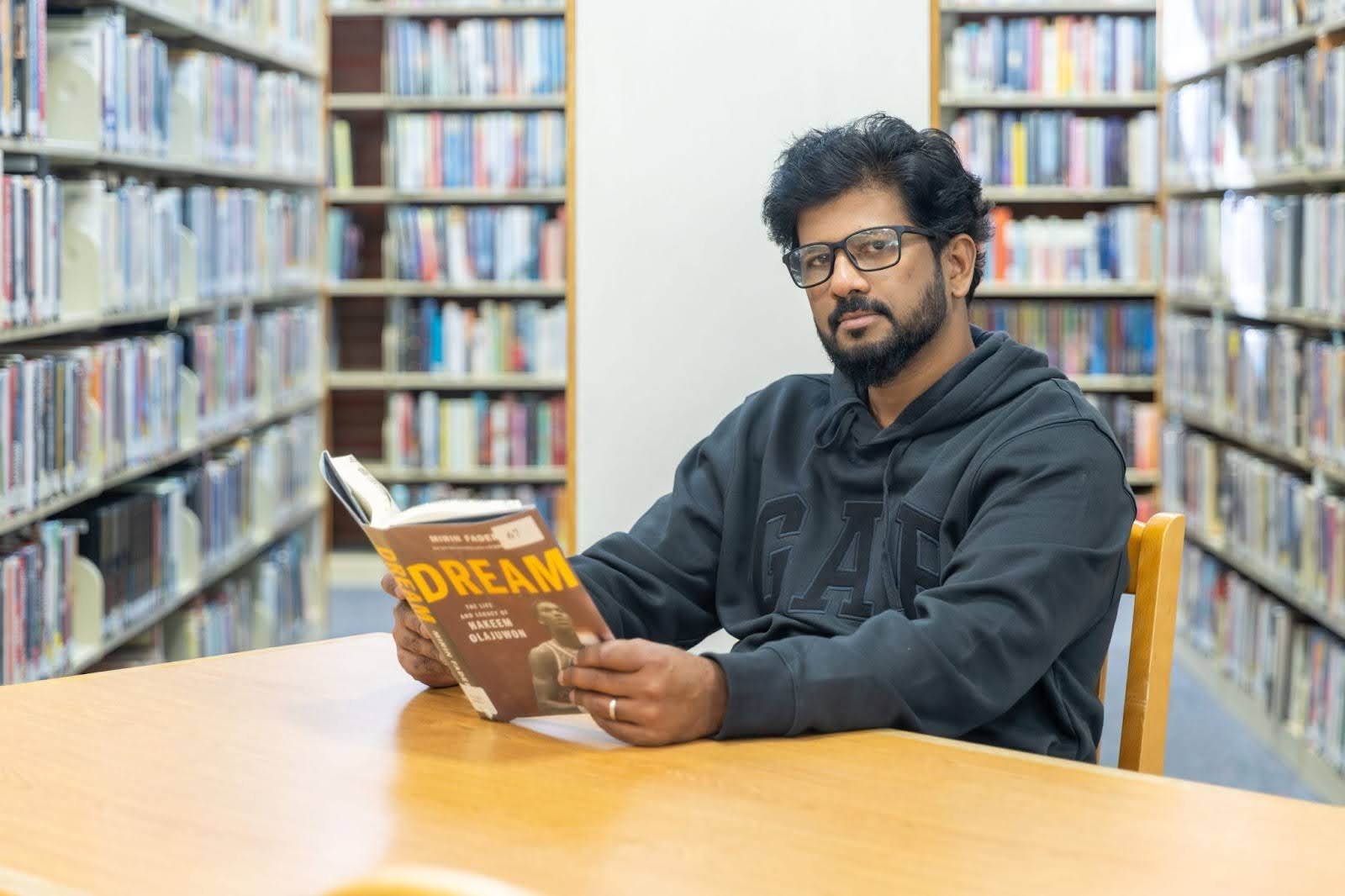


“The migration from H.264 to H.265 represents more than an incremental improvement,” explained Shaibujan Thankappan Kamalamma. “Reducing bandwidth needs by half while keeping the same image clarity reshapes what streaming companies can sustain economically.”
The global video codec market reached 2.11 billion USD in 2024, projected to expand to 3.14 billion USD by 2033. Beneath those numbers lies an intricate framework hidden behind each moment a viewer presses play. Every moving image is compressed, transmitted, and reconstructed through algorithms refined by seasoned experts. Mr. Thankappan Kamalamma’s portfolio stretches across video frameworks relied upon worldwide — from Apple’s VideoToolbox APIs on iOS and macOS, to backend systems powering Discovery Plus.
He specializes in 4K and ultra‑high‑definition HDR workflows, embedded multimedia for compact devices, and adaptive streaming frameworks that serve vast audiences. The range exhibits versatility, joining hardware optimization and network orchestration. Within Apple’s Audio & Media Technologies division, he crafts core VideoToolbox components, shaping how millions of developers deliver seamless playback experiences.
Architecting Infrastructure For Global Streaming
Discovery Plus debuted January 4, 2021, with more than 55,000 episodes requiring a robust transcoding system. Mr. Thankappan Kamalamma directed backend workflow design that converted raw footage into H.264 and H.265 cascading formats while structuring output for adaptive bitrate delivery. The infrastructure synchronized with HLS and MPEG‑DASH standards under multi‑DRM encryption using PlayReady, Widevine, and FairPlay protection.
Streaming quality intertwines with bandwidth efficiency. Netflix recommends around 25 Mbps for 4K HDR streams, while Amazon’s target hovers near 15 Mbps. Reaching these benchmarks requires cell‑level optimizations deep inside each codec algorithm. Mr. Thankappan Kamalamma applies his command of MPEG‑2, MPEG‑4, H.264, H.265, and audio codecs such as G.711 and G.726 to deliver a balance between speed and clarity. His approach includes muxing and demuxing container formats MP4, FLV, ASF, and MPEG‑2 TS.
GPU coding through OpenCL and SSE enhances parallel compression throughput. Modern 4K pipelines tolerate no frame delay. His embedded expertise extends across ARM and MIPS architectures running embedded Linux, enabling realistic playback on limited hardware.
Breakthrough Performance Optimization
“Every computing environment imposes distinct boundaries,” observed Mr. Thankappan Kamalamma. “DirectShow dominates Windows stacks while GStreamer orchestrates Linux flows. Developers juggle threading models and memory rules yet must deliver identical outcomes.”
The codec market grows at 22.1 percent yearly from 2024 through 2030. HEVC keeps its foothold, though AV1 and VVC formats climb rapidly. Royalty‑free implementations tempt content distributors burdened by license disputes. Mobile usage now generates more than 75 percent of total global video traffic.
Among his innovations stands real‑time HDR acceleration. Working on Advanced HDR by Technicolor, Mr. Thankappan Kamalamma turned Inverse Tone Mapping from a sluggish three frames per second to a consistent 60 fps in 4K. He achieved this through parallel frame segmentation, slice‑based processing, SIMD SSE instruction tuning, and careful CPU core affinity management. The method set a new threshold for broadcasting fidelity.
He further advanced Direct DCT transcoding, bypassing intermediate color decoding to convert MPEG‑2 coefficients directly to H.264 while reusing motion vectors and metadata headers. The design sharply elevated efficiency across workloads.
Expanding Scope Beyond Video Processing
His technical background reaches enterprise‑grade security engineering, combining cryptographic algorithms, SSL protocols, AES encryption, and biometric identity management. As streaming ecosystems prioritize content protection, such experience becomes indispensable. Secure transmissions fortify intellectual‑property retention while scaling distribution.
Innovations include Bio‑Certificates — PKI‑based digital keys embedding biometric identifiers within AES‑secured envelopes — forensics‑grade technology that safeguards email and identity verification. During his tenure at Optiwise Solutions, Mr. Thankappan Kamalamma’s biometric framework integrating fingerprint and iris validation gained industry recognition for blending science and usability.
Industry strategist Marcus Wellington offered a measured view: “Sophisticated codec pipelines demand considerable resources. Companies must weigh the trade‑off between performance leaps and engineering overhead, given H.264’s continued serviceability.”
Transition adoption obstacles remain. Sixty‑one percent of firms cite licensing barriers, and forty‑five percent face cross‑compatibility issues. Hardware acceleration lags software maturity, compelling multiple profile maintenance.
Still, bandwidth economics sustain codec innovation. CDN costs scale directly with traffic loads. Netflix’s adoption of AV1 showed a 30 percent reduction in delivery data, producing immediate operating savings.
Professional Recognition And Technical Authority
The IEEE Senior Member designation in 2025 recognized over a decade of verified technical leadership. The honor underscores his expertise and stewardship across global media technologies. He contributes as a PeerJ Computer Science reviewer and judges the 2025–2026 Conrad Challenge, guiding young technologists toward practical innovation.
Outside research, Mr. Thankappan Kamalamma manages consumer software ventures. Classi4U.com functions as an online marketplace with mobile apps rated above 4 stars on Apple and Google Play. His Jan Collage Maker app secures 4.6 on iOS and 4.2 on Android, demonstrating steady user satisfaction.
Recent collaboration on Apple’s VTFrameProcessor API combined machine learning with temporal‑noise control. Mr. Thankappan Kamalamma designed the motion‑estimation subsystem linking hardware logic to developer‑facing parameters within Apple’s VTTemporalNoiseFilterConfiguration and VTTemporalNoiseFilterParameters documentation. His coding fluency spans Node.js, Python, C/C++, PHP, Swift, and Go across mobile, desktop, and cloud contexts.“True technical leadership recognizes that tools serve objectives,” concluded Mr. Thankappan Kamalamma. “The most refined algorithm achieves little unless real deployment realities stay front of mind. Progress demands harmony between theoretical precision and practical integration.”