


Over 800 million people worldwide work in primary agricultural production. A significant share of them cannot see clearly, and almost none of their employers know it. Uncorrected refractive error, a condition affecting 1.1 billion people worldwide, disproportionately affects rural, low-income populations where health services are sparse, and aging workforces are the norm. The economic consequences have gone largely unmeasured until now.
New field research from Guatemala’s coffee sector has put hard numbers to a problem that agronomists, labor economists, and public health officials have long suspected but rarely quantified. Workers with uncorrected vision problems harvested 12.2 fewer pounds of coffee per day than their peers with healthy eyesight. A $29 intervention corrected that gap, generating $900 in farm revenue per worker across three harvest seasons.
Forty-seven years after its founding in Berkeley, Seva Foundation is producing something the global health sector has long struggled to generate consistently: rigorous field research that alters how finance ministries and agribusiness boards evaluate their workforce spending. The organization’s latest study, conducted across 12 Guatemalan coffee farms with 332 seasonal workers during the 2023-2024 harvest season, found statistically significant evidence that correcting vision problems among agricultural workers is one of the most cost-effective labor productivity tools available to low- and middle-income economies.
A Workforce Problem Hiding In Plain Sight
Rural agricultural communities bear the highest rates of preventable, uncorrected visual impairment of any population segment. Health services rarely reach them, and as younger generations migrate to cities, the workers left behind skew older, precisely the demographic most vulnerable to presbyopia, astigmatism, and other refractive conditions. Guatemala alone has approximately 2 million residents living with some form of visual impairment, and rural prevalence approaches 30%.
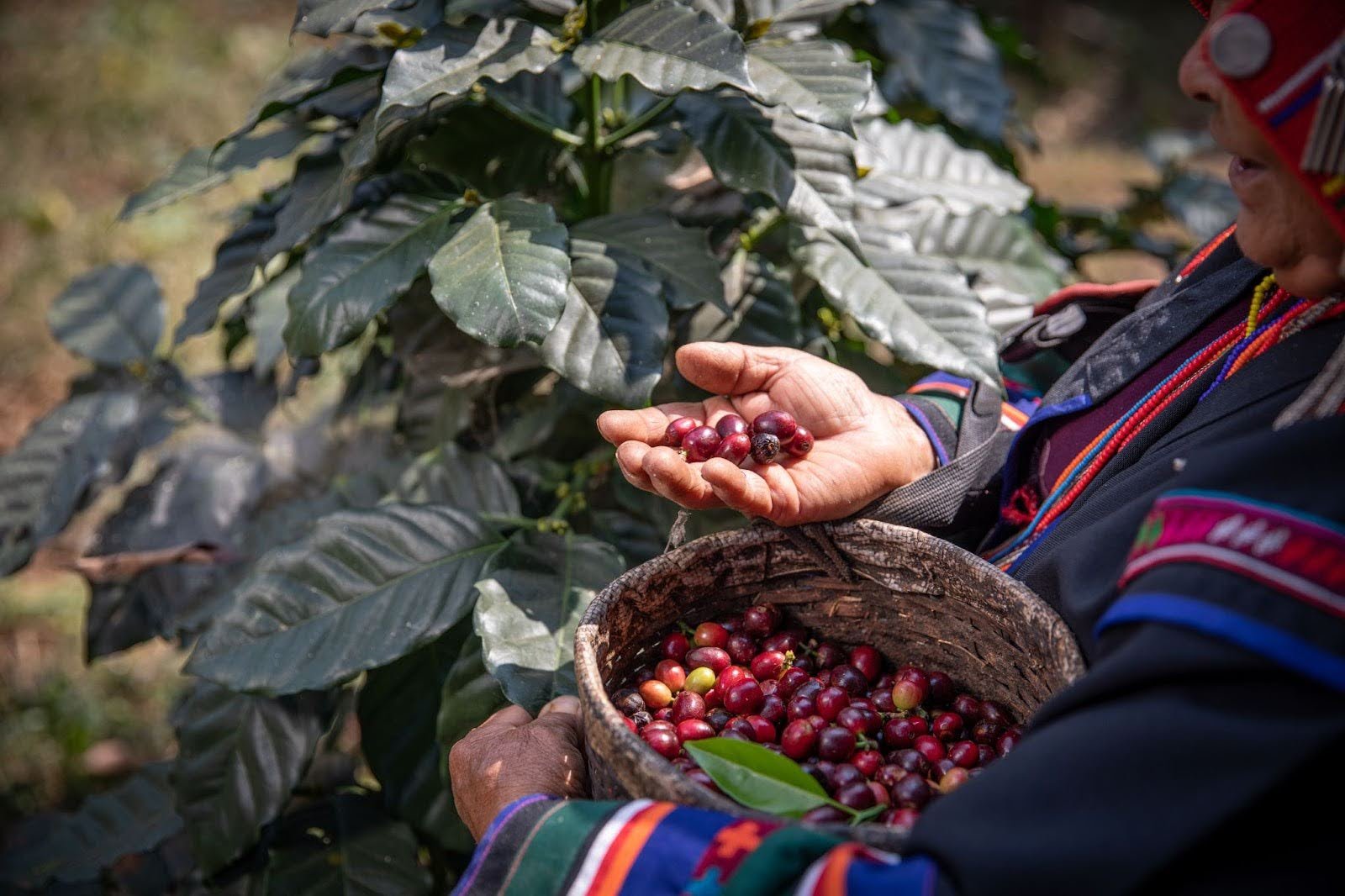
The productivity mechanism is straightforward once examined. Coffee harvesting demands two distinct visual tasks performed repeatedly across long working days. Workers must scan plants from a distance to locate clusters of ripe cherries, then shift focus to examine individual berries up close for ripeness. Workers with impairments affecting both near and far vision, such as astigmatism, recorded the largest output losses before correction, and the largest gains afterward, picking 14.8 additional pounds per day once fitted with glasses, a 10.4% productivity increase.
“We estimate that providing glasses increases harvest output by about 12 pounds per worker per day, roughly an 8% productivity gain, at a cost of $29 per person. Harvesters receive more than $300 in extra wages and farm owners experience $900 in higher revenue from every pair of glasses provided on farms, a remarkable win-win for workers, businesses and Guatemalan society,” says Brad Wong, Chief Economist at Seva Foundation, the Berkeley-based nonprofit that co-authored the research.
What The Data Reveals About Agricultural Investment Priorities
The Guatemala study is the first of its kind in Latin America, produced through a collaboration between the Seva Foundation and economists from UC Davis, the University of San Francisco, and the Johns Hopkins University Carey Business School. Researchers used an ANCOVA model as the primary specification, with two-way fixed effects and two-stage difference-in-differences approaches as robustness checks, all returning consistent, statistically significant results across 332 workers on 12 farms.
The financial returns are striking enough to reframe how farm owners and government planners think about workforce investment. Every dollar spent on glasses returned $10.90 to workers over three harvest seasons. Farm owners recovered $2.60 per dollar invested, even after paying out higher wages to newly productive workers. Comparable evidence across developing countries indicates that eye care interventions yield benefit-cost ratios of 36 to 1, six times the median return from other global development investments.
Those returns arrive faster than almost any comparable health or education intervention. Productivity gains materialized within the first week of glasses use, a pace almost without precedent in public health program evaluations.
Closing The Gap Between Evidence And Action
The practical barrier has never been cost. Glasses cost $16. Screening and diagnosis add $13.40. The barrier has been infrastructure: getting qualified optometrists, equipment, and prescriptions to farms located hours from the nearest city.
Seva Foundation has spent nearly five decades building exactly that infrastructure across more than 20 countries. Their Pristine 2.0 camera, portable enough to fit in a backpack, detects conditions at the back of the eye and enables full clinical examinations in remote settings. Mobile screening teams have carried it to farms, villages, and Indigenous communities where fixed clinics have never existed.
“The evidence is clear: a small investment in vision leads to immediate productivity gains, higher incomes for workers, and meaningful returns for employers, often within days. That kind of speed, scale, and alignment between human wellbeing and economic value is rare, and it’s exactly what governments, donors, and businesses need to see when deciding where to invest for impact,” says Kate Moynihan, Executive Director and CEO at Seva Foundation.
Since 1978, Seva has delivered eye care services to 72 million people. The Guatemala research represents its most precise economic argument yet that the agricultural sector, chronically strained by labor shortages and extreme weather pressures, has been sitting on one of its cheapest available productivity solutions.