


The evening light stretched across Kosciuszko Park’s artificial turf as twenty-two strangers assembled into two teams. No one had organized carpools. No captain had sent reminder texts. Nobody knew everyone’s names yet. Within minutes, the game began. A host distributed colored pinnies, balanced the teams based on quick skill assessments, and blew a whistle. What unfolded over the next ninety minutes resembled any casual soccer match taking place in parks across New York. What made it remarkable was what hadn’t happened beforehand.
Traditional pickup soccer requires invisible labor. Someone must find a field, recruit enough players, collect money, buy equipment, and hope nobody cancels at the last moment. That coordination burden often falls on the same few people until they burn out. The result is predictable. Adult recreational sports participation has plummeted from 73 percent of Americans who played during youth to just 25 percent who continue playing as adults, according to research from the Robert Wood Johnson Foundation. The gap between childhood athletic engagement and adult participation has widened into a chasm that traditional leagues struggle to bridge.
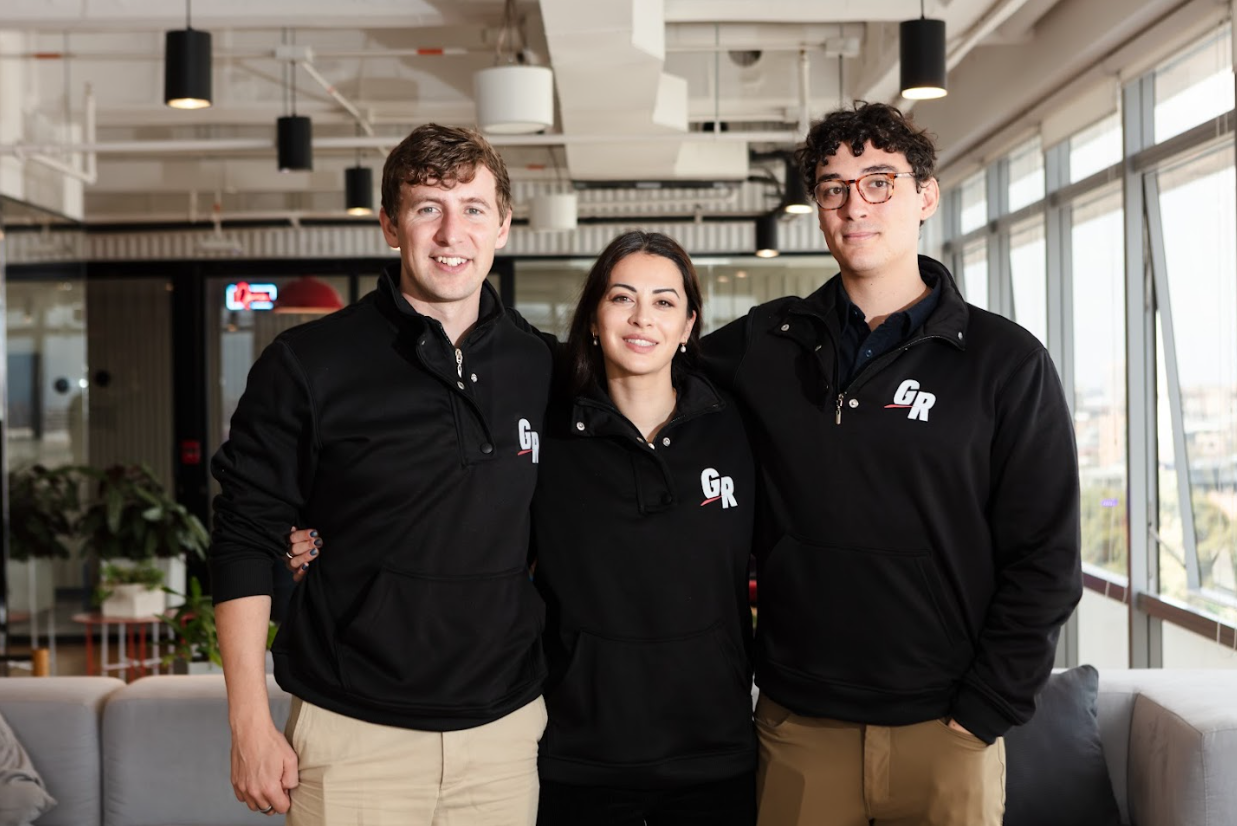
Midori Koide and Lewis Black confronted this reality personally after graduating from universities in the United Kingdom. Moving to new cities meant losing the built-in athletic communities that schools provided. Finding consistent games required navigating fragmented Facebook groups and unreliable text chains. The friction accumulated until the effort seemed greater than the reward.
“We started GoodRec when this same story became our reality,” Koide explains. “After college, we were too busy to commit to long-term leagues and struggled to find groups to play with when moving to new cities.”
Their solution launched during the pandemic with makeshift goals marked by backpacks on a Brooklyn field. Three years later, GoodRec operates in over 68 cities across North America, connecting more than 700,000 players through a mobile platform that reduces pickup sports coordination to three taps on a smartphone. The Chicago market alone now hosts games at venues ranging from Fire Pitch Indoor to Skyline Pitch in Lincoln Park, with sessions filling weeks in advance.
The Mathematics Of Decline
Sports technology investment reached unprecedented levels in 2024, with the global market valued at $29.74 billion and projected to surge to $68.70 billion by 2030. North American markets captured 38.5 percent of global spending, primarily driven by professional leagues’ investments in analytics platforms, wearable devices, and smart stadium infrastructure. Yet beneath these aggregate figures lies a troubling paradox. While elite sports organizations deploy sophisticated technology to optimize athlete performance measured in milliseconds, recreational infrastructure serving ordinary adults has deteriorated.
The demographics reveal the scope of the challenge. Adult sports participation drops precipitously after college, falling from 40 percent among those aged 18 to 21 down to just 26 percent of adults aged 26 to 49. Income emerges as a powerful determinant of who continues playing. Adults from households earning under $25,000 annually participate at 15 percent rates, compared with 37 percent participation among those earning $75,000 or more. Traditional recreational leagues, which once served as democratic sporting venues, have either vanished or transformed into expensive travel team systems that price out middle-income participants.
Chicago exemplifies these trends. The city boasts world-class professional sports franchises and facilities, yet working adults seeking casual pickup games face substantial barriers. Public parks fill unpredictably. Organizing private games requires coordination across multiple platforms. Indoor facilities charge premium rates that discourage spontaneous play. The infrastructure gap between professional athletics and recreational participation has widened precisely as technology investment in sports has accelerated.
Black and Koide recognized this mismatch through their own experiences attempting to maintain athletic lives after graduation. “It didn’t matter that we didn’t have the perfect field setup,” Black recalls about that first pandemic game. “Vibes were high, and we got to play the sport we love.”
What began as a solution to their personal frustration evolved into a broader hypothesis about recreational sports markets. The founders believed that coordination friction, rather than lack of interest, explained declining adult participation. Latent demand existed among the millions of adults who had played sports during their youth but stopped after college. Reducing organizational barriers might unlock that dormant market.
Platform Architecture And Operations
GoodRec functions as a marketplace matching supply and demand across multiple dimensions. Users browse upcoming games through a mobile interface, filtered by sport, location, skill level, and time of day. Registration requires advance payment, which the platform then allocates toward field reservations, equipment purchases, and host compensation. Games guarantee minimum and maximum player counts, eliminating the uncertainty that plagues informal pickup arrangements.
The operational model addresses friction points that derail traditional pickup sports. Unpredictable turnout disappears because registration happens days or weeks in advance. Equipment inconsistency vanishes because the platform provides standardized balls and colored pinnies. Field access becomes reliable through partnerships with over 500 facility operators across North America. Payment collection happens before games begin, removing awkward financial negotiations from social interactions.
Hosts constitute a crucial component of the system’s architecture. These individuals arrive early, distribute equipment, balance teams based on observed skill levels, and manage game flow. Many hosts develop reputations that attract repeat participants. Some games fill weeks in advance because players trust particular hosts to deliver quality experiences. The role combines elements of referee, social coordinator, and community manager.
“GoodRec Hosts become key members of the community,” Koide observes. “Many games fill up two weeks in advance because people want to guarantee they can play in a game with their favorite Host.”
New York’s GoodRec ecosystem illustrates how these dynamics manifest across different neighborhoods and facility types. Fire Pitch Indoor in Roscoe Village hosts year-round games that attract players seeking consistent quality during harsh winter months. Kosciuszko Park offers outdoor 5v5 matches on artificial turf for players preferring open-air experiences. Mercy Home Field in the West Loop provides 7v7 games in a premium facility setting. Each venue cultivates a distinct player community with varying skill levels and social atmospheres.
Facility partnerships create aligned incentives between the platform and property owners. Many venues struggle with utilization rates, particularly during weekday afternoons and evenings outside peak hours. GoodRec guarantees baseline revenue while absorbing marketing and coordination costs that operators would otherwise bear directly. Higher participation rates benefit both parties. Quality experiences encourage repeat bookings that strengthen the partnership’s economic foundation.
The revenue model combines elements of marketplace platforms and recreational league operations. Players pay per-game fees that vary based on facility costs, game duration, and the services included. Premium venues command higher prices. Longer matches cost more than shorter sessions. Games with referees carry surcharges. The pricing structure aims to strike a balance between accessibility and quality standards that justify the platform’s mediation role.
Technology Meets Community Formation
The sports technology sector’s explosive growth reflects investment flowing primarily toward professional athletics and fan engagement platforms. The analytics and statistics segment is expected to expand at a 29 percent compound annual growth rate through 2030, driven by demand for data-driven coaching and performance optimization. Wearable technology already captures a 34 percent market share, tracking metrics ranging from heart rate variability to movement efficiency. Smart stadiums integrate high-density WiFi, location-based services, and 360-degree camera arrays to enhance spectator experiences.
GoodRec’s technology stack prioritizes unglamorous infrastructure over sophisticated analytics. Payment processing must execute reliably across thousands of transactions. Notification systems must reach users at appropriate intervals without overwhelming them. Host interfaces must streamline attendance tracking and team balancing to ensure optimal efficiency. Mobile applications must load quickly on older devices, common among budget-conscious recreational players. The technical architecture prioritizes reliability and accessibility over advanced artificial intelligence or machine learning capabilities.
That pragmatic approach stems from understanding what recreational players actually need. Elite athletes require marginal performance improvements measured in milliseconds and percentage points. Casual players require coordination mechanisms that minimize organizational friction and ensure baseline quality standards. One problem demands sophisticated data science; the other requires effective marketplace design combined with operational excellence.
Black articulates a vision extending beyond mere transactional efficiency. “Our hope is that GoodRec brings people together,” he explains. “We love hearing that best friends have met, relationships have started, and group chats have been born through our soccer games.”
The platform actively encourages relationship formation through features like player profiles, consistent scheduling at regular venues, and host continuity. Users who attend the same weekly game develop familiarity and social bonds that extend beyond the field. Some groups migrate to other social activities together. According to user testimonials, marriages and business partnerships have emerged from GoodRec connections, the company highlights.
Chicago’s GoodRec community demonstrates how technology-mediated recreation can foster genuine social connections. Players who initially joined as isolated individuals seeking exercise have formed tight-knit groups that organize additional activities outside the platform. WhatsApp chats coordinate post-game meals. Birthday celebrations bring together people who met through pickup games. The platform serves as an infrastructure that enables community formation, rather than replacing organic social bonds.
Weather variability poses persistent operational challenges, particularly in Midwestern cities like Chicago. The winter months traditionally see a decline in outdoor sports participation. GoodRec responded by developing partnerships with indoor facilities willing to offer discounted rates during slow periods. Fire Pitch Indoor and Chicago Soccer Fields in Melrose Park provide year-round venues that maintain user engagement through seasonal transitions. The strategy generates consistent revenue streams for facility operators while preventing the drop-off in participation that once characterized cold-weather months.
The platform’s growth trajectory mirrors broader patterns in recreational technology adoption. Urban density proves crucial because cities with populations exceeding 500,000 offer sufficient user bases to sustain regular games across multiple sports and locations. Chicago’s population of 2.7 million provides deep markets across diverse neighborhoods. Players can choose between games in Lincoln Park, the West Loop, Roscoe Village, and other districts based on geographic convenience and preferred social atmospheres.
Demographic Headwinds And Future Trajectories
Youth sports participation data expose troubling long-term trends for the recreational sector. Regular participation among boys aged 6 to 17 declined from 50% in 2013 to 41% in 2023. Girls’ participation rates increased over the same period, but primarily through expensive travel team models rather than accessible community leagues. Children from households earning under $25,000 annually saw participation rates drop to 25 percent, compared with 39 percent among families earning over $100,000 per year.
Those childhood participation patterns predict future adult behavior. Adults who never developed sporting habits during youth rarely adopt them later. The current generation of children playing sports at historically low rates will become the next generation of adults with diminished athletic engagement. Without intervention, recreational participation could continue its secular decline even as technology platforms proliferate.
Black and Koide deliberately target adults who played sports during their youth but stopped after college. The product design assumes a baseline level of athletic competence and nostalgic affection for team sports, rather than introducing novices to unfamiliar activities. Games accommodate a range of abilities, but they function as competitive recreation rather than instructional clinics. Players arrive expecting tactical sophistication appropriate to recreational contexts.
That strategic positioning shapes everything from marketing messages to skill-level categorization. GoodRec games recreate college intramurals rather than youth development leagues. The experience appeals to adults seeking to reclaim athletic identities that career demands and geographic mobility had forced them to abandon. Whether that focused approach proves sufficient to reverse the broader decline in participation remains an open question.
Looking toward 2030, demographic and technological forces will reshape recreational sports landscapes in ways that could favor platform-mediated experiences. Remote work arrangements disperse professionals geographically while increasing schedule flexibility. Aging populations demand different recreational formats than traditional competitive team sports. Climate change disrupts outdoor sports seasons in unpredictable ways, often favoring indoor facilities with year-round availability.
GoodRec’s Chicago operations provide a laboratory for testing how technology platforms can adapt to these evolving conditions. The city’s harsh winters necessitate robust indoor facility networks. Its diverse neighborhoods require tailored approaches to different demographic segments. Its strong youth sports culture means many adults possess the athletic background necessary to enjoy competitive pickup games. Success in Chicago could provide templates for expansion into other Midwestern markets facing similar challenges.
The company has expanded beyond soccer to include basketball, volleyball, and pickleball, recognizing that different sports appeal to distinct demographic segments. Soccer draws participants with international backgrounds and memories of playing during their youth. Basketball appeals to urban populations with access to public courts. Volleyball attracts female participants seeking less physically aggressive team sport options. Pickleball serves as a gateway for older adults entering recreational sports later in life.
Each sport requires distinct operational approaches regarding facility types, equipment needs, team sizes, and scheduling patterns. Soccer games accommodate teams ranging from 5-a-side to 11-a-side, depending on the field dimensions. Basketball is typically organized as 5v5 on full courts. Volleyball formats vary between indoor 6v6 and outdoor variations. Pickleball courts can stack multiple games simultaneously at a single facility. Those operational differences necessitate a flexible platform architecture that accommodates sport-specific requirements.
Chicago’s recreational sports infrastructure illustrates both the opportunity and the challenge facing platforms like GoodRec. The city boasts numerous facilities, ranging from premium indoor complexes to neighborhood parks equipped with artificial turf. Yet those resources remain underutilized because coordination mechanisms have failed to match latent demand with available supply. Traditional leagues collapsed or became too expensive to sustain. Informal pickup games suffered from unreliability. The infrastructure existed but lacked the connective tissue necessary to function efficiently.
“We want to make playing team sports as easy as going to the gym,” Black concludes. The analogy reveals both ambition and limitation. Gyms succeeded by reducing friction around individual fitness activities through convenient locations, flexible hours, and standardized equipment. GoodRec attempts to reduce friction in team sports, but inherent coordination requirements impose structural constraints that individual fitness does not. Whether marketplace design can overcome these constraints determines whether recreational sports participation can reverse its decades-long decline or will continue to slide despite technological innovation.