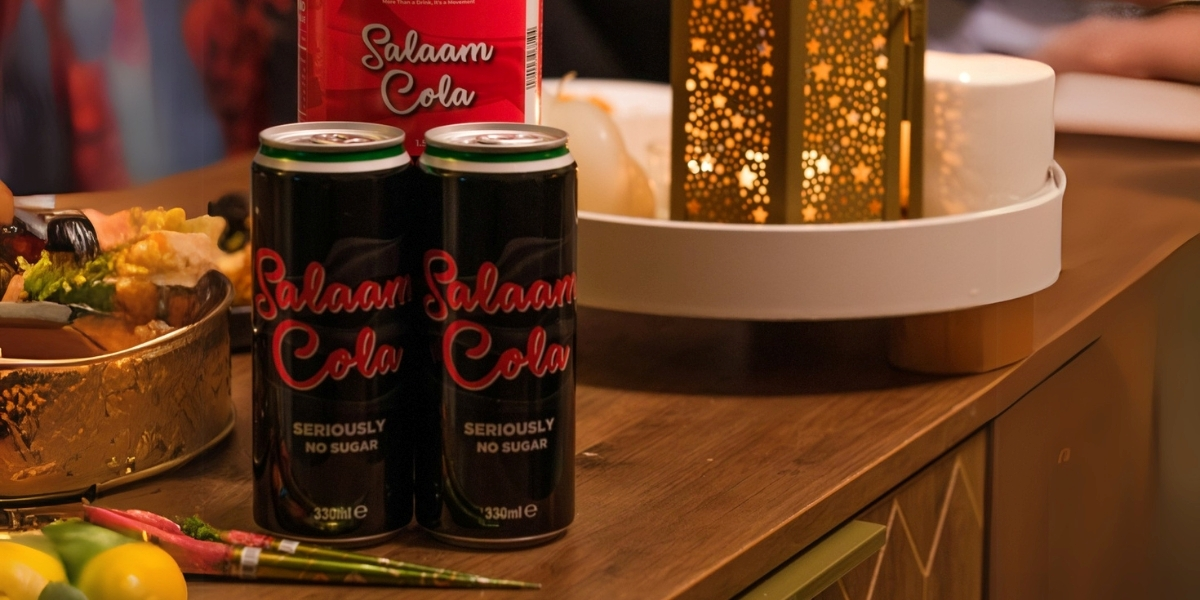

Aykiz Shah built something that was never supposed to work. A soft drink with no flashy marketing, no celebrity face, and no shortcuts, launched by a woman few decision-makers had seen coming. She did not roll it out from a boardroom. She mapped it out while raising children, handling shipping invoices, and designing labels on a borrowed laptop. The brand is now sold in 14 countries. It feeds families in Gaza, rebuilds classrooms in Egypt, and pays therapists who treat displaced children. And still, people keep asking where they can buy the next bottle.
Salaam Cola began in Dublin. No fanfare. No launch party. Just a truckload of product and a promise: 10 percent of profits would be given to people enduring war, hunger, and dislocation. It took less than a year to reach Qatar. UAE orders are already rising. The Gulf region has taken to the drink quickly. Sales are strong. So is the message.
Doing The Work Without Applause
Shah does not use phrases like “give back.” She talks about making the margins matter. Every distributor who signs on is asked to mirror the company’s 10 percent rule with donations to local registered charities. That revenue has funded medical procedures in Syria, housing assistance in Lebanon, and meal packs for orphans in Afghanistan. No ad agency was involved. No campaign manager crafted a story. People heard, people saw, and people passed it on.
In Egypt, Salaam Cola partnered with aid groups to build a school for Palestinian children who fled the conflict. Women who once taught in Gaza classrooms now teach again. Licensed counselors support the students through daily group sessions. The building stands because of soft drink sales. That is not a metaphor. It is real. The walls were paid for one bottle at a time.
The company is quiet about its charity because the work speaks louder. Photos are shared online. Receipts are posted. Social media is used for showing results, not making statements. Shah does not believe in dramatic messaging. “If you want people to believe you, show them the impact. Every time,” she says.
Taste First, Purpose Always
Salaam Cola would not move off the shelves if the drink failed the first test: taste. Customers across Europe and Asia praise its formula for being full-bodied and smooth without the afterbite common in similar drinks. The product delivers on expectations. That is where Shah’s instinct for quality shows. She never trained in food science. She just knew what flavors people remembered.
The business now receives weekly expansion inquiries from retailers across the Middle East, North Africa, and Southeast Asia. Two production facilities, one in the UAE and one in Southeast Asia, are under review. If they go forward, they will generate over 2,000 jobs tied to bottling, sourcing, and transport.
Statista projects the global soft drink market will hit 1.49 trillion dollars by 2025. Trends point to strong growth for ethically marketed brands. Salaam Cola did not arrive to chase that opportunity. It was already operating with a structure that others now scramble to copy. While larger players test limited charity tie-ins, Shah continues to fund core aid programs with every shipment.
The Path No One Drew
Shah’s story is not framed to inspire. She avoids polished narratives. She is open about the difficulty. She worked 19-hour days. She delivered crates herself. She skipped every rule in the startup playbook. Still, the company grew. It expanded not through pitch decks, but through action. A distributor in Doha reordered before their first shipment sold out. A store in Johannesburg doubled shelf space after two weeks. Word spreads when people taste something that does more than taste good.
Her appearance is discussed more often than she would like. She wears the niqab. It has never been part of the brand—and she does not want it to be—but she refuses to hide it. Some early investors walked away. Others questioned whether visibility might hurt sales. She ignored them. “I do not need to be seen to be effective,” she says. The product and the results speak loud enough.
Flavors are expanding, and herbal blends and fruit-based formulas are being tested. Shah takes her time. The original product still sells strongly. Growth will come, she says, only if the mission keeps pace. She is careful. She has seen what happens when brands chase scale and leave their purpose behind. Salaam Cola will grow, but it will grow without compromise.