
The way people move through cities is changing faster than most streets can keep up. Population growth, new mobility options, and rising expectations for safety and sustainability are putting enormous pressure on every intersection and corridor. For many city leaders and integrators, the question is no longer whether to modernise, but how to do it without drowning in cost and complexity.
XVision AI, a fast‑growing intelligent transport and smart‑city technology company, has put itself right at the centre of that challenge. Rather than adding yet another point solution to an already crowded field, the company set out to build a unified traffic intelligence platform that lets cities “see” what is really happening on their roads and act on it in real time without the integration headaches that have slowed progress for years.
From Scattered Sensors To Real Intelligence
Talk to almost any traffic engineer and a familiar picture emerges: loops under the asphalt, radar on poles, thermal sensors watching at night, and cameras feeding into a patchwork of back‑end systems. Each device does its job, but they rarely work together in a way that gives a clear, consistent view of risk, congestion, and behaviour. That fragmentation has made it difficult to scale intelligent transport solutions beyond a few showcase sites.
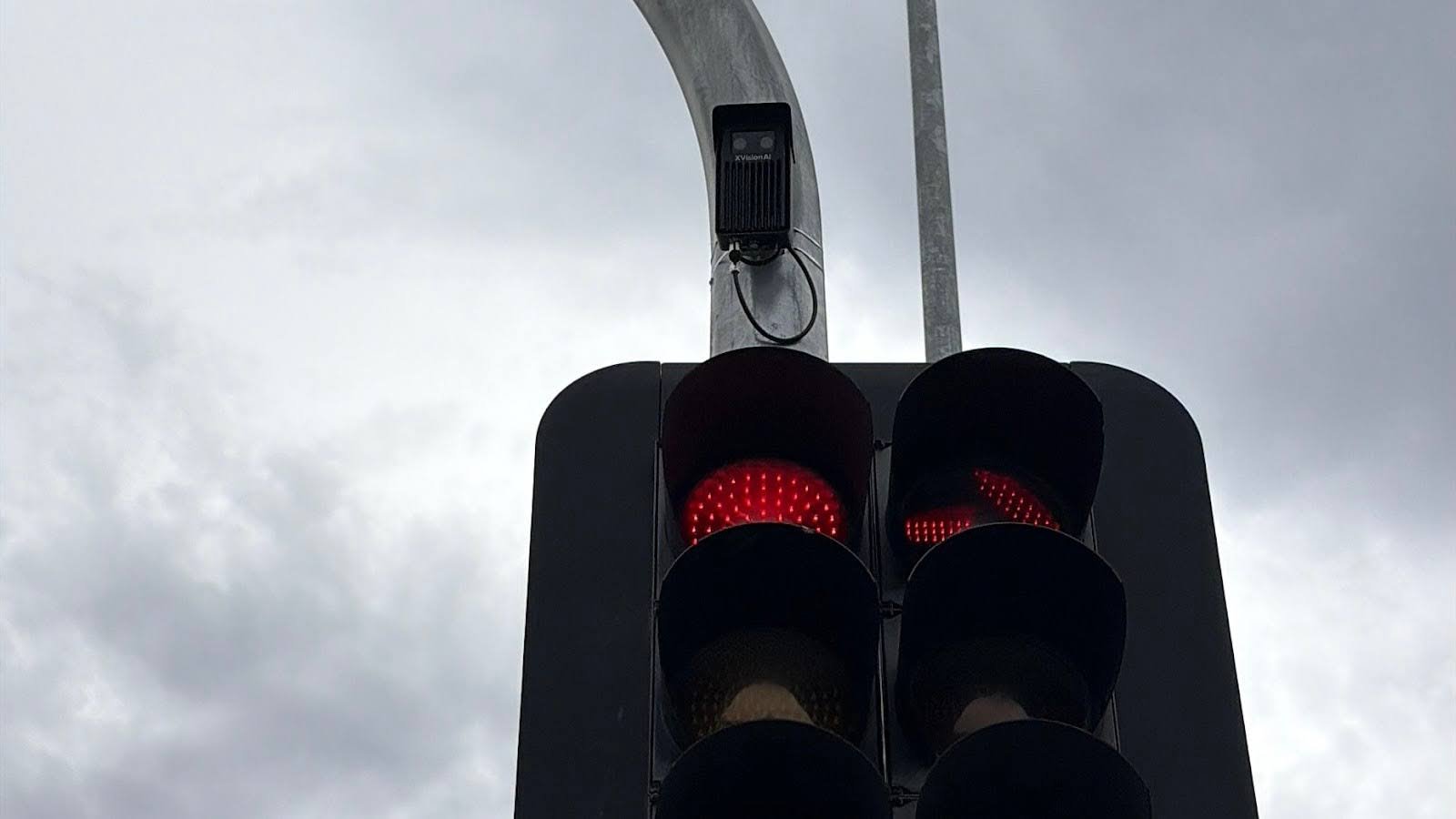
XVision AI approached the problem from the opposite direction. Its flagship product, EagleEye, is a stereo‑vision device with on‑board AI that combines detection, analytics, and decision‑making in a single unit. Mounted at an intersection, it continuously identifies and tracks vehicles, pedestrians, cyclists, and other road users, measures how they move, and flags patterns that matter—from near misses at a busy crosswalk to chronic queues on a key approach.
Instead of sending raw video back to a control room for later analysis, EagleEye processes data directly on the device and shares structured information with traffic controllers, cloud systems, and reporting tools. That means cities can use it to run everyday operations, support safety programmes, and feed long‑term planning—all from the same platform. For integrators, it turns each deployment into a repeatable pattern rather than a bespoke integration project.
“What we’ve done with EagleEye is collapse what used to be five or six separate systems into one intelligent platform. Instead of fragmented data from loops, radar, and cameras, cities now get a single, consistent source of truth that reflects how all road users actually interact in real time.”
Giving Cities The Insight They Always Wanted
The promise of intelligent transport has always been simple: the right information, at the right time, in the right hands. In practice, that has been harder to achieve. Traditional sensors can confirm that a vehicle is present, or that a queue has formed, but they rarely explain why certain patterns keep appearing—or how close a corridor might be to a serious incident.
EagleEye is designed to bridge that gap. By capturing high‑resolution, 3D information on how all modes interact, it can surface near misses, conflict points, and risky behaviours that do not show up in crash statistics. Safety teams gain an early‑warning system: they can see where problems are building long before they turn into headline events. Planners, meanwhile, can explore how changes to geometry or signal timing affect behaviour without waiting for years of historical data.
For city executives and elected officials, the impact is as much about confidence as it is about technology. Decisions on where to invest, which intersections to upgrade, or how to support “Vision Zero” and “Zero Harm” targets can now be grounded in detailed evidence rather than a patchwork of counts, complaints, and assumptions.
“For the first time, councils and integrators can move beyond guesswork. XVision AI gives them the evidence to answer critical questions—where risk is building, why congestion persists, and where investment will have the greatest impact—before those issues turn into costly or dangerous outcomes.”
A Partner For Integrators And Public Agencies
One of the reasons XVision AI has gained traction so quickly across APAC is its focus on making life easier for the people who actually deliver projects. Integrators get a single device that can handle multiple use cases—stop‑bar detection, multimodal counts, safety analytics, adaptive signal inputs, and more—without having to blend hardware and software from several suppliers at every site.
For public agencies, the model is deliberately flexible. Cities can start with a narrow scope, such as improving a handful of high‑risk intersections or building a better understanding of a single corridor, and then scale out as proof accumulates. Because new capabilities can be added through software and configuration, there is no need to rip out and replace equipment every time policies, standards, or mobility patterns shift.
That combination—technical depth, commercial flexibility, and a clear roadmap—has positioned XVision AI not just as a vendor, but as a long‑term partner for cities and integrators who want to modernise steadily rather than in disruptive bursts. As more intersections across the region come online, the picture becomes richer: each new site adds to a network‑level view of how people move and where the next improvements should be made.
In a world where urban transport is under constant pressure to be safer, cleaner, and more efficient, XVision AI’s bet is that the most valuable technology will be the kind that helps cities see clearly—then act with confidence. For many councils and integrators across APAC, that is exactly the kind of partner they have been waiting for.