
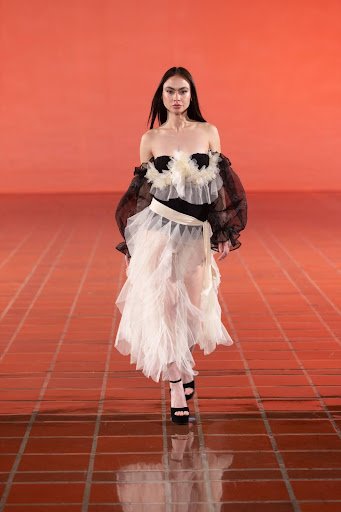

Midnight in Miami often feels theatrical long before the runway lights switch on. Music spills from rooftops. Stylists hurry through hotel corridors with garment bags brushing against crowded elevators. Camera flashes bounce across South Beach while influencers rehearse poses against neon-lit walls. Swim Week has always carried spectacle, though much of it once unfolded behind guarded doors.
The Bureau Fashion Week plans to open more of those doors during Miami Swim Week 2026. Scheduled for May 29 and 30 in Miami Beach, the event will feature multiple runway presentations across two days with ticketed access available to the public rather than restricted to invited industry guests. Organizers frame the event as a fashion experience built for spectators alongside insiders.
Fashion Week traditionally relied on exclusion to preserve status. Editors occupied the front row. Buyers sat nearby. Celebrities arrived through private entrances while the public watched later through photographs and social media clips. Miami Swim Week by The Bureau Fashion Week proposes another structure. Tickets begin at $65, while premium packages climb into four figures for guests seeking lounge access, backstage entry, concierge service, and preferred seating.
Fashion Week Meets Live Entertainment
The Bureau Fashion Week has spent recent years building public-facing runway events across cities including Los Angeles, New York, Dallas, Paris, and Miami. Miami Swim Week appears particularly suited to the company’s format because the city already treats fashion like nightlife, tourism, and performance wrapped into one environment.
More than 50 designers are expected across the weekend schedule, with collections spanning swimwear, resort fashion, and ready-to-wear. Organizers reference names including Krissy King, Zara Al Fayed, Pia Bolte, and Chung Yuul among participating talent connected to various presentations.
Five runway shows will unfold across the two-day schedule. Guests may purchase individual tickets or weekend passes depending on how deeply they want to immerse themselves in the event. General admission grants standing-room access while reserved seating and front-row options place attendees progressively closer to the runway itself.
That proximity has become increasingly valuable in the social media economy. A front-row seat no longer functions merely as a viewing position. It acts as digital currency. Photos captured from close range circulate globally within minutes, particularly during Swim Week, where visual spectacle drives audience attention aggressively.
Miami’s Appetite for Visibility
Miami has never behaved like a restrained fashion capital. New York prizes editorial influence. Paris guards luxury tradition. Miami thrives on visibility, nightlife, glamour, and visual excess. Swim Week emerged partly because few American cities could stage swimwear against such a naturally theatrical backdrop.
The Bureau leans heavily into that atmosphere. VIP lounges, backstage access, after-hours gatherings, and concierge packages form part of the event structure. Weekend passes begin at accessible price points before escalating into premium experiences nearing $2,000.
Fashion still trades heavily on aspiration. Premium seating retains social value because access remains limited. Yet something changes once members of the public can purchase seats once reserved almost entirely for editors and industry insiders.
Students, creators, tourists, influencers, and aspiring designers increasingly occupy the same room as fashion professionals. The front row begins to look less like a private enclave and more like a public spectacle. Miami Swim Week may reveal how far Fashion Week has moved away from exclusivity and toward entertainment culture.