
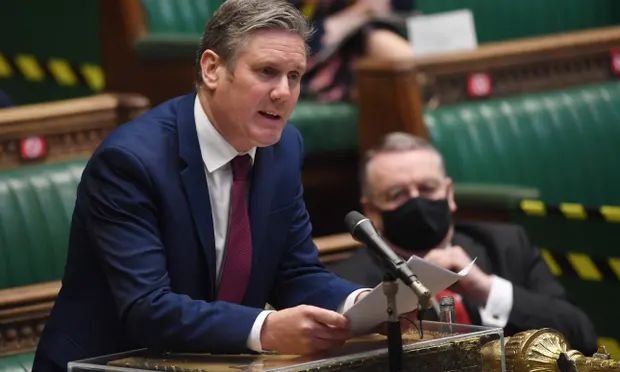

The attack line was meant to wound, not boomerang. Critics of Keir Starmer believed they had found a neat linguistic trap: portray the Labour leader as a hollow technocrat, a “forensic lawyer” with no feel for ordinary people, a man of procedure rather than conviction. Yet as the phrase ricocheted through broadcast studios and social feeds, something unexpected happened. It began to sound less like an insult and more like a job description many voters quietly welcomed.
In a political era scarred by chaos, scandal and improvisation, “forensic” does not necessarily read as cold; it can signal care, diligence and seriousness. The very language designed to diminish Starmer’s appeal instead threw his main contrast into sharper relief: a leader who appears to listen carefully, measure his words and avoid gratuitous drama. The more opponents repeated the caricature, the more they reminded the public of what they themselves had been unable to offer: predictability and restraint.
There is a lesson here that goes well beyond one British politician. When a narrative is built on clever phrasing rather than credible substance, it becomes dangerously fragile. A single shift in public mood can turn a supposedly cutting line into a mirror that reflects more about the speaker than the target.
How Framing Backfired
Political language works only when it aligns with what people feel and experience. For years, Starmer’s critics tried to pitch him as dull, managerial and bloodless, implicitly contrasting him with a more colourful, improvisational style of politics that once seemed electrifying. That framing had a chance of sticking in 2019, when disruption still felt like a risk worth taking. In the aftermath of a pandemic, a cost‑of‑living crisis and rolling institutional scandals, the appetite for “colour” began to look like a luxury. Stability, not showmanship, started to feel like the radical promise.
In that climate, repeatedly calling a candidate “forensic” and “lawyerly” does something the authors of the script did not intend. It tells anxious voters that this is someone unlikely to gamble with their mortgage, pick fights for sport or treat public money as an afterthought. The insult depends on a shared assumption that being methodical is a vice. Once that assumption disappears, the line collapses.
The miscalculation also exposes a broader weakness in modern political messaging: an overreliance on pre‑tested attack phrases that are never meaningfully re‑examined when circumstances change. Once a label enters the partisan bloodstream, it is repeated long after it has ceased to resonate. By the time Starmer’s opponents realised they were effectively supplying his campaign with a character reference, the phrase had already done its quiet work.
When Slogans Meet Reality
The saga underlines something every communications professional knows instinctively but political actors often forget: words cannot permanently outrun lived reality. Voters do not simply absorb slogans; they test them against what they see on their screens, in their workplaces and around their kitchen tables. A neat put‑down may generate a short burst of coverage, but if it jars with the broader mood, it starts to feel artificial. Once that happens, audiences begin to question the messenger more than the message.
Starmer’s public persona, for better or worse, has been defined by caution, legalistic phrasing and a refusal to answer questions with theatrical flourishes. For critics, this was supposed to be evidence of weakness. For many viewers, it read as a deliberate break from the improvisational chaos that defined the previous political cycle. The same traits framed as “boring” on a panel show could appear reassuring during a cost‑of‑living interview or a sombre address about public services.
Over time, the gap between the slogan and the experience widened. If a man repeatedly described as aloof and out of touch keeps appearing in settings where he is talking about energy bills, crumbling infrastructure or overstretched hospitals, the caricature starts to fray. The scornful label that once sounded sharp begins to feel like a relic of a different moment, preserved only because the people deploying it have little else left in the tank.
Lessons In Political Storytelling
For campaigners and strategists, the episode is less a curiosity than a case study in narrative control lost. An attack line is not a brand asset; it is a volatile instrument that must be continually tested against the emotional landscape of the audience. If the ground moves and the line stays frozen, the story slips from your hands. The target of the joke can quietly become the custodian of its meaning.
The Starmer example also shows the danger of relying on cleverness as a substitute for clarity. A phrase that delights insiders or wins approving nods in a sympathetic studio can fall flat outside that bubble. When the main criticism of a candidate is that they are serious, restrained and methodical, many voters will hear something closer to competence than contempt. The opposition’s “own goal” was not just linguistic; it was strategic, revealing how far their sense of the public had drifted from the public itself.
At its heart, this is a story about underestimating the reader, viewer and listener. People are adept at decoding tone, context and motive. They can see when a line has been lab‑crafted for effect, and they can tell when the reality in front of them refuses to cooperate with the script. In that gap, political fortunes can rise or fall. The words meant to define Keir Starmer may linger, but not in the way their authors intended.