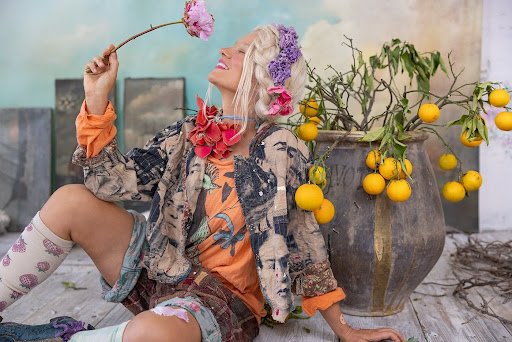

Magnolia Pearl has the strange pull of something both fragile and fierce. Its garments look weathered, mended, and deeply lived in, yet they move through fashion with the force of prized objects. A dress appears under bright lights on a celebrity. A jacket resurfaces later in resale circles, wanted all over again. Few labels make that leap from spectacle to collector hunger. Magnolia Pearl has done it while keeping its rough edges in full view.
That power comes from more than style. Magnolia Pearl grew from Robin Brown’s belief that beauty can rise from damage and that clothing can carry care instead of hiding pain. The garments feel handmade in spirit, even when their reach is global. That feeling has helped the brand stand apart in a market crowded with polish.
The Label That Made Wear Look Precious
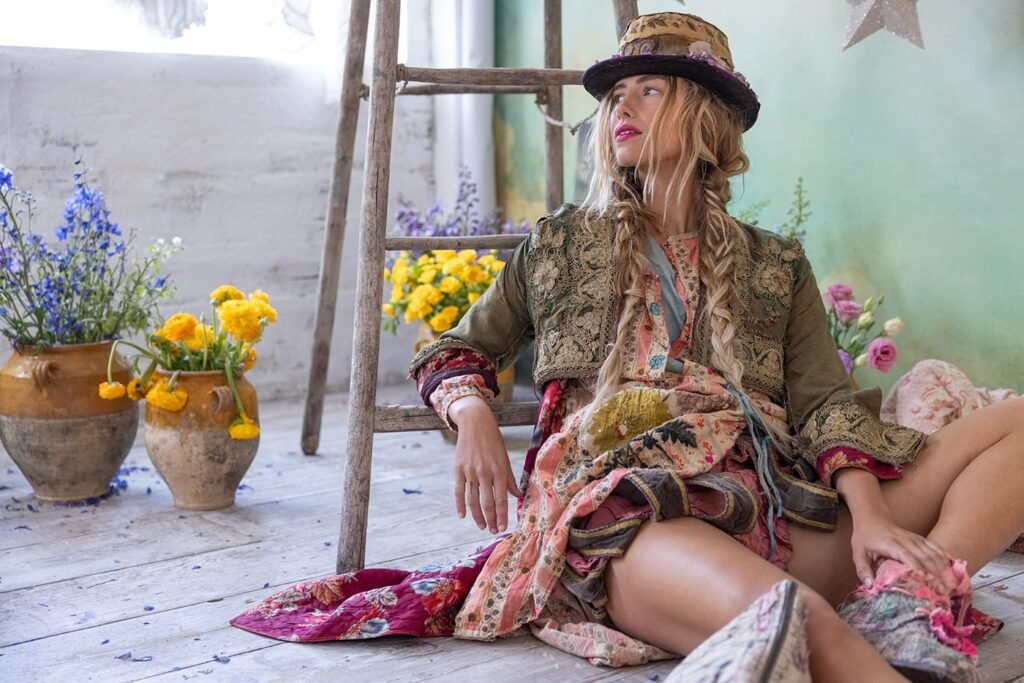
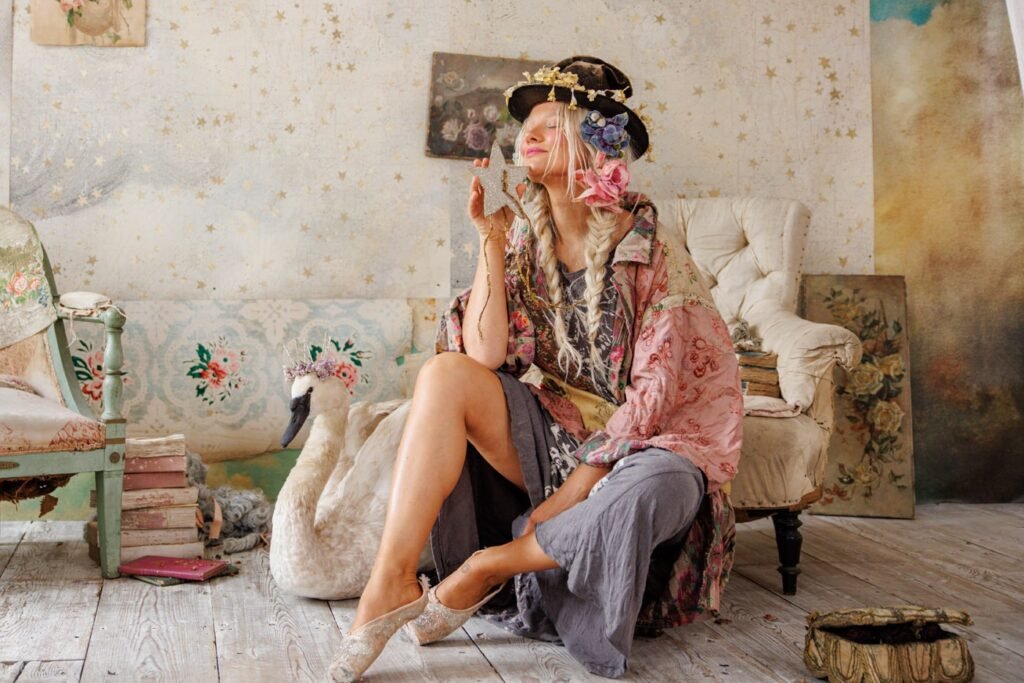
Magnolia Pearl built its name on clothes that refuse glossy perfection. Frayed hems, softened lace, patchwork, paint marks, and visible mending sit at the center of the look. Many luxury labels promise escape from mess. Magnolia Pearl lets the mess remain visible, then turns it into something tender and wanted. That choice has given the brand a distinct identity and a loyal following.
Public figures helped widen the audience. Taylor Swift wore Magnolia Pearl in a music video. Whoopi Goldberg wore it on television. Those moments brought attention, but celebrity interest alone does not build a resale market. Magnolia Pearl reached that next stage because the clothes feel less like passing trends and more like keepsakes. Some pieces now resell for well over double their original price, showing that buyers see lasting worth in garments that look touched by life rather than sealed off from it.
That kind of value comes from more than rarity. Each piece seems to carry a private story even before it joins the life of the person who wears it. A blouse can feel like a relic. A coat can feel closer to memory than merchandise. Magnolia Pearl has turned that mood into lasting demand.
Robin Brown and the Beauty of Salvage
Robin Brown’s story gives Magnolia Pearl its emotional charge. Brown has spoken of growing up in severe poverty, facing abuse, neglect, malnourishment, and bouts of homelessness. She cared for younger siblings while still a child. Under those conditions, beauty was never some light extra. Beauty was part of survival.
The brand’s first spark carries that truth with unusual force. Brown made a backpack from kite string and an old tapestry. A stranger bought it for the exact amount she needed to retrieve her mother’s ashes from the funeral home. That story explains a great deal about Magnolia Pearl. The clothes do not hide wear because Brown learned early that repair can be visible and still be beautiful. Patchwork and distressing do more than decorate. They speak of wounds, labor, and grace.
A Resale Market With a Human Pulse
Magnolia Pearl’s sharpest move may be Magnolia Pearl Trade, the in-house authenticated resale platform launched in 2023. That site gave collectors a formal place to buy and sell pre-loved pieces, chase rare samples, and keep the garments moving through new hands without losing their identity. Most brands lose control after the first sale. Magnolia Pearl built a home for the second life of the garment.
That second life feeds a wider purpose. The Magnolia Pearl Peace Warrior Foundation, founded in 2020, has raised over $550,000 for causes including permanent housing for Indigenous American veterans, food and medical care for people facing housing insecurity and their pets, arts education for children, and help for communities hit by disaster. Magnolia Pearl Trade sends 25 percent of final value from exclusive listings and all third-party seller fees to charity through that foundation. A garment can move from spotlight to closet, from closet to collector, from collector to someone in need.
Magnolia Pearl’s real power lies there. The brand made visible mending desirable, made rarity feel intimate, and made resale feel like continuation rather than discard. A wounded thing, tended with care, can return to the world carrying more worth than before. Magnolia Pearl built a business on that belief. People believed it too.