
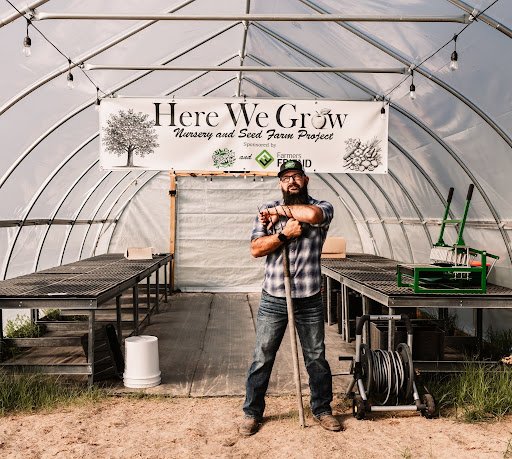

Matthew Gauger does not speak like most internet personalities. His videos rarely contain arguments, hot takes or dramatic reveals. Instead, the South Carolina-based content creator spends much of his time talking about raised garden beds, compost piles and how to grow tomatoes without overwatering them.
That style has helped him build an audience of more than 1.6 million followers across social media platforms, an unusual trajectory at a time when online engagement is often driven by confrontation. Gauger’s account, Greenhorn Grove, has become part gardening tutorial, part self-sufficiency journal and part commentary on slowing down.
The shift was not planned from the beginning. Gauger started posting online several years ago while still working in nightlife management. His early content followed familiar internet patterns: short comedic clips, lip-sync videos and trend-based posts designed to gain attention quickly. After years of posting, growth remained modest.
Then the pandemic disrupted the hospitality industry and changed his daily life. Gauger moved to a rural property and began gardening casually while spending more time offline. He says the experience forced him to reconsider both his personal habits and the kind of content he wanted to make.
“I realized I didn’t want to spend my life trying to be famous just to be famous,” Gauger said.
The transition coincided with growing public interest in gardening and self-sufficiency during Covid-era lockdowns. According to the National Gardening Association, participation in home gardening increased significantly during the pandemic, particularly among younger adults and first-time growers.
Gauger leaned into that demand by posting instructional videos rather than entertainment content. Instead of trying to create viral arguments, he focused on practical topics: seed starting, preserving vegetables, simple farm repairs and lessons learned from mistakes on his own property.
The response was immediate. Within one month of changing direction, he says his account gained more followers than it had in the previous three years combined.
Today, Gauger’s audience stretches across political and geographic lines. His comment sections frequently include people who identify very differently politically but interact over gardening questions and homestead projects. Gauger often points to that dynamic as evidence that common interests still have the ability to cut through polarization online.
“Common interests are more powerful than common enemies,” he said.
That philosophy now shapes much of his broader work. Gauger recently founded Here We Grow, a nonprofit organization focused on food insecurity, free educational resources and community agriculture projects. Through the group, he plans to distribute seed kits, educational guides and support for community gardens.
The nonprofit also became involved in relief efforts following Hurricane Helene in western North Carolina. According to Gauger, the organization helped support temporary housing and volunteer infrastructure during the recovery process.
Still, the organization remains relatively young, and much of its visibility depends directly on Gauger himself. That reflects a larger trend in creator-led philanthropy, where nonprofits increasingly grow around digital personalities rather than traditional institutional structures.
Analysts who study online creator economies note that this model can be effective in mobilizing attention quickly, but it also carries risks if organizations become too dependent on a single public figure.
For Gauger, however, the broader mission remains rooted in changing online behavior itself. He frequently describes his platform as an attempt to “normalize goodness” on social media — an effort to show that educational and community-oriented content can still attract large audiences without relying on outrage.
“I want people to leave my page feeling calmer than when they arrived,” he said.
Whether that formula can continue growing at scale remains uncertain. Social platforms still reward emotionally charged content, and creator audiences are notoriously difficult to maintain over time. But Gauger’s rise suggests there is at least some appetite for a slower, more grounded style of internet culture — one built around usefulness rather than conflict.