
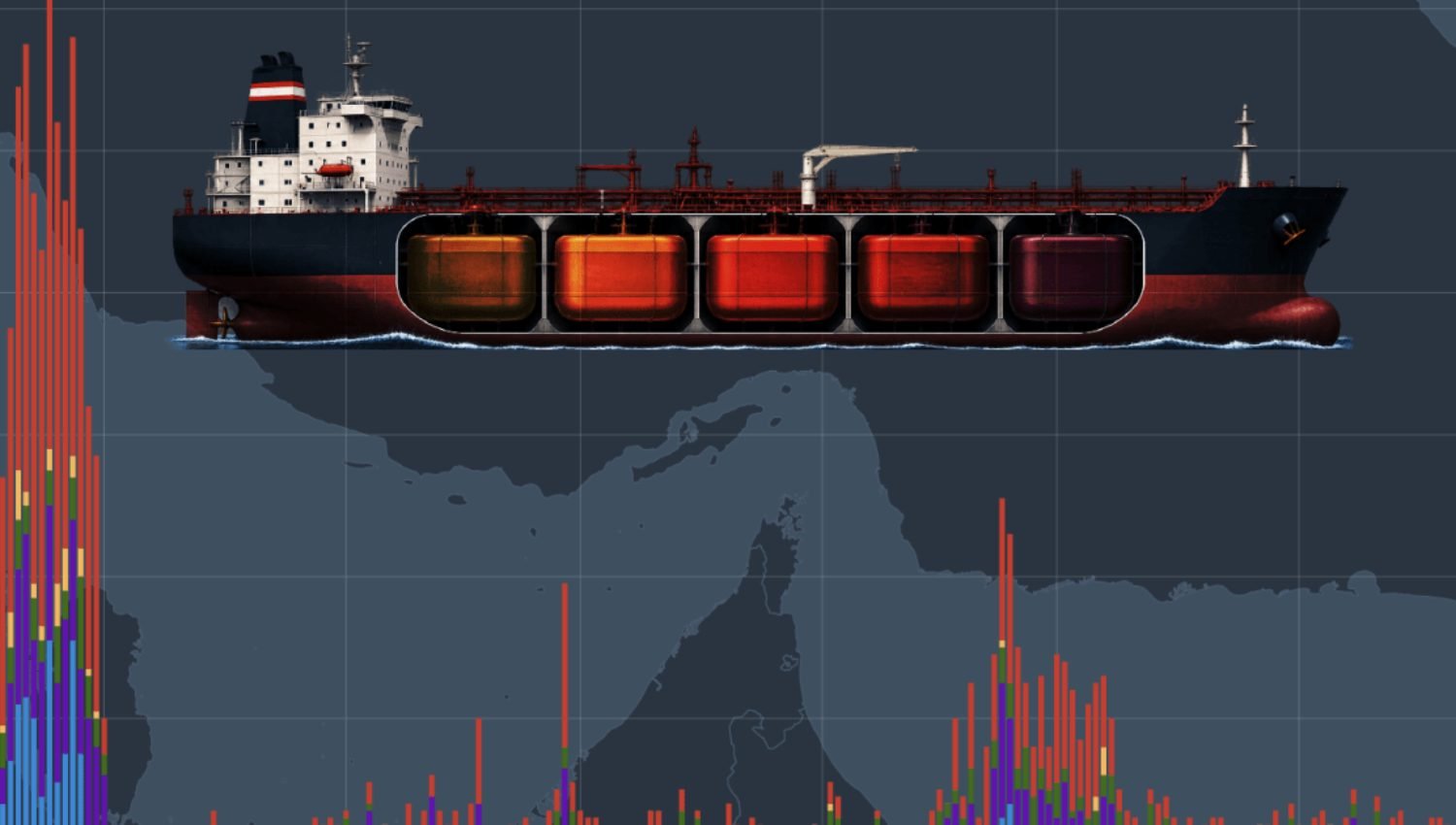

Maritime traffic through the Strait of Hormuz has collapsed by roughly 95 percent, with daily vessel transits falling from about 100 ships to as few as five. The waterway, one of the world’s most critical energy chokepoints, handles close to a third of seaborne crude oil.
Crude exports from Gulf producers have dropped by around 47 percent, with direct shipments through the strait falling to roughly 2.2 million barrels a day. Analysts estimate that five to seven million barrels of Gulf oil daily now face some form of disruption.
Shipping has been rerouted toward the Red Sea and Southeast Asia, with Singapore and Malaysia emerging as major redistribution hubs. Kuwait recorded the steepest fall in port traffic, while Saudi Arabia’s decline was cushioned by pipeline links.
Oil prices have risen about 20 percent, though analysts attribute much of the increase to market adjustment rather than an outright supply shock. Depleted inventory buffers could leave the market vulnerable to sharper volatility ahead.
For European economies dependent on stable energy flows, the reordering of global shipping routes is a pointed reminder of how quickly a single chokepoint can ripple through the world economy.