
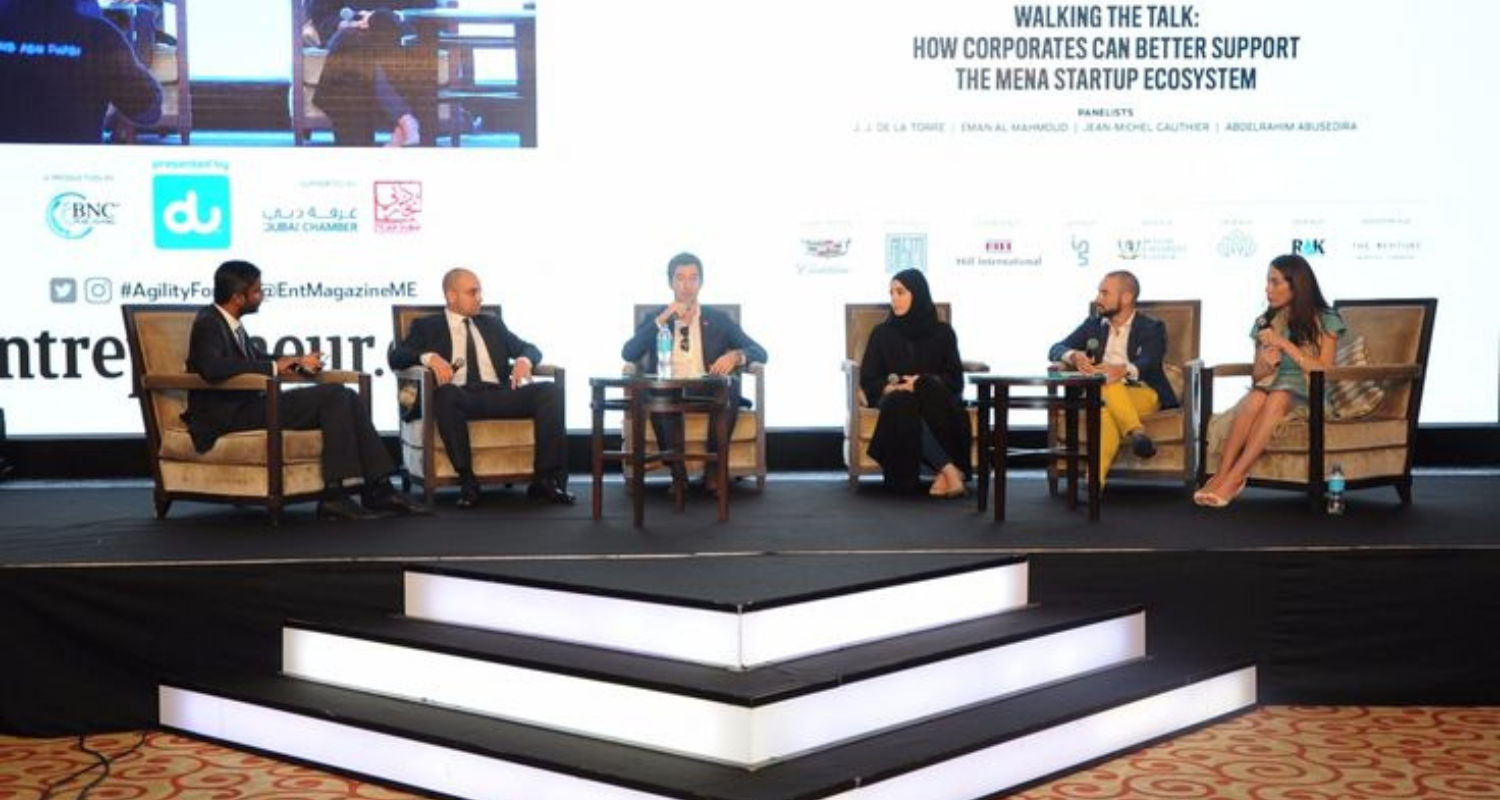

As the Middle East and North Africa’s technology ecosystem enters a more mature and globally connected phase, the conversations that matter most are moving beyond product launches and funding announcements. They are increasingly centered on access: access to investors who understand the region, access to international markets, and access to the strategic relationships that can turn an ambitious startup into a scalable business.
That is the atmosphere surrounding Key Trek 2026, an initiative designed to bring MENA-based technology founders into closer contact with global investors. More than a conventional networking event, the gathering is expected to create a setting where entrepreneurs, venture capital firms, institutional backers, and industry leaders can assess opportunities that are reshaping one of the world’s most closely watched emerging innovation regions.
A Region Ready for Its Next Chapter
For years, MENA’s startup scene has been defined by its potential. Young populations, fast-growing digital adoption, improving infrastructure, and government-backed economic diversification programs have all created fertile conditions for technology-led businesses. Entrepreneurs across the region are building platforms in financial technology, artificial intelligence, e-commerce, health technology, logistics, climate solutions, and enterprise software.
Yet potential alone does not build enduring companies. Founders often face the harder task of securing growth capital, finding experienced partners, and presenting local solutions in a language that resonates with international markets. Key Trek 2026 arrives at a time when many startups are seeking to move beyond early validation and establish the kind of operational scale that attracts long-term global interest.
The event’s focus on connecting founders with investors recognizes a fundamental shift in the regional landscape. MENA is no longer simply a market that overseas investors observe from a distance. It is increasingly becoming a source of businesses capable of serving regional needs while also competing across borders. The opportunity now lies in helping the strongest of those businesses gain the visibility and strategic support required to expand.
Turning Introductions Into Investment Conversations
In the world of venture capital, a single introduction can open a path that months of cold outreach cannot. Founders may have compelling products and clear market demand, but investors also look for context: the quality of a leadership team, the depth of its customer insight, the defensibility of its technology, and the credibility of its growth plan.
Key Trek 2026 is positioned to create those deeper conversations. Rather than reducing investor engagement to quick pitches and crowded conference halls, the initiative can give participants space to explore the stories behind the business models. For a founder developing payments infrastructure in the Gulf, or a health-tech company addressing access challenges in North Africa, the chance to explain local market realities can be as important as presenting revenue figures.
This more personal approach matters because MENA is not one uniform market. Each country has distinct regulations, consumer behaviors, talent pools, investment environments, and economic priorities. Global investors who understand those differences are better equipped to identify businesses with genuine staying power. Likewise, founders benefit from meeting capital partners who can offer more than funding, including international networks, governance experience, sector knowledge, and access to new customer markets.
Beyond Capital, Building Global Confidence
Investment is often described in financial terms, but the impact of international backing extends much further. When a respected global fund supports a regional company, it can strengthen the startup’s credibility with prospective customers, future employees, suppliers, and follow-on investors. It can also signal that the company has met a standard of diligence that reaches beyond its home market.
For emerging technology businesses, that confidence can be transformative. A startup preparing to enter Europe, Asia, or North America must navigate unfamiliar commercial expectations and more established competitors. Investors with global experience can help founders refine their market-entry strategy, anticipate operational risks, and position their offering for audiences who may not yet understand the problem it solves.
Key Trek 2026 therefore represents an opportunity to support a broader ambition: giving MENA founders the confidence to think internationally from the beginning. The region has already produced companies that have scaled across borders, but the next generation may be even more globally minded. They are building with multilingual customers, cross-border regulation, cloud-based infrastructure, and international talent in mind from the earliest stages of development.
The Human Story Behind Innovation
At the center of every startup ecosystem are people willing to take risks before the outcome is clear. Behind the investment decks and valuation discussions are founders who have spent years persuading colleagues, customers, and families that their idea can become a company. Their journeys frequently involve navigating limited resources, fragmented markets, and the pressure to grow quickly in a competitive environment.
Events such as Key Trek 2026 offer these entrepreneurs a valuable stage, but they also offer something more subtle: recognition. Being included in an international investment conversation affirms that innovation from the MENA region deserves to be evaluated on its own strengths, not treated as a secondary story within global technology.
As investors look for new markets, resilient founders, and technologies that solve real-world challenges, MENA’s startup community is gaining momentum. The most meaningful outcome of Key Trek 2026 may not be measured only by the deals announced afterward. It may be found in the partnerships that begin quietly, in the investor who discovers an overlooked company, or in the founder who leaves with a clearer vision of how far their idea can travel.
For a region increasingly determined to shape its own digital future, those connections could become the foundation of its next generation of global technology leaders.