
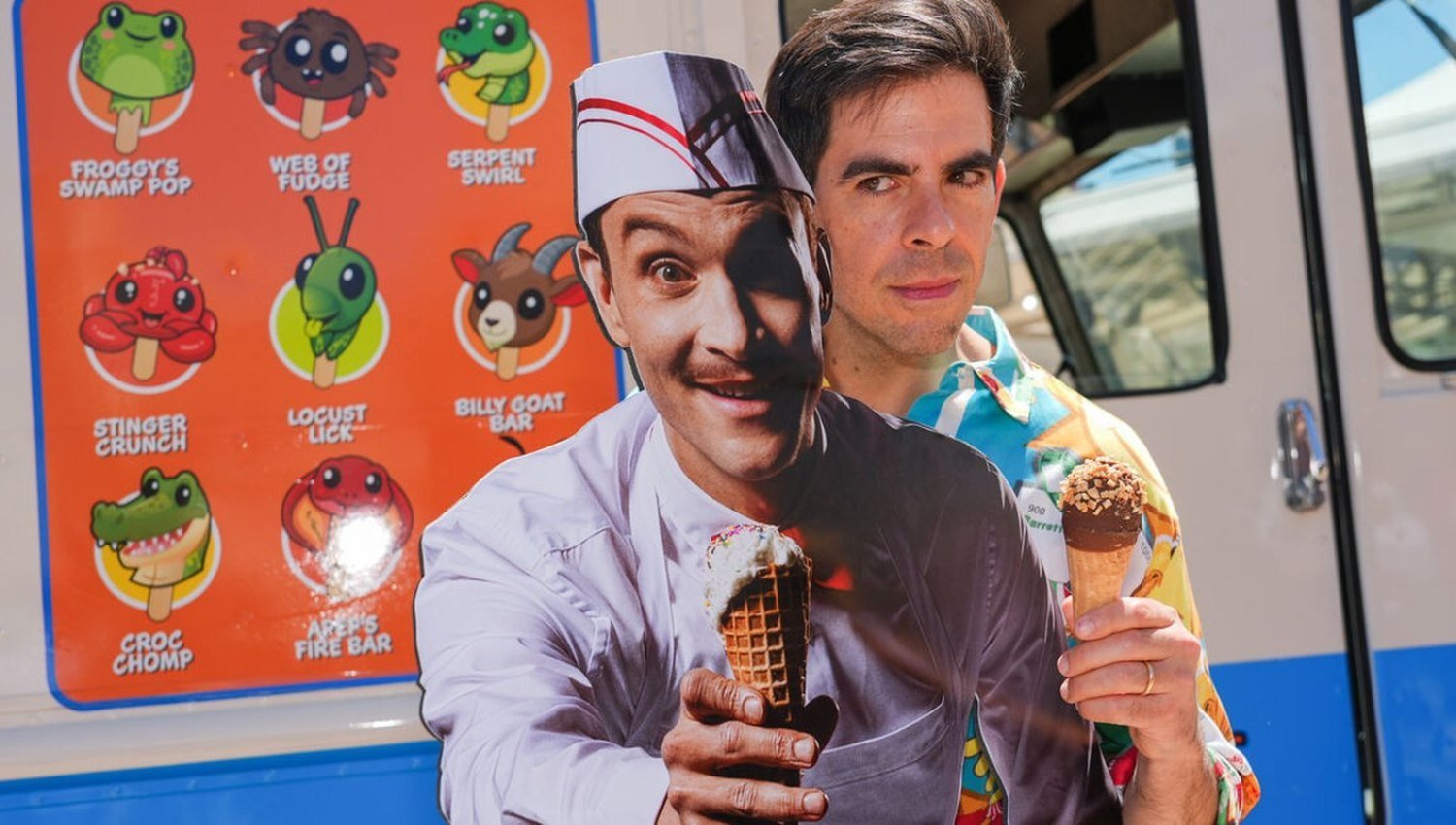

Eli Roth has admitted that artificial intelligence was used on a small part of his new horror film “Ice Cream Man,” walking back an earlier claim that the work in question was entirely his own. “I was wrong. AI was used in a very small portion of a few scenes in the film,” the director said, framing the technology as something that helped him realise his vision rather than replace his hand.
The admission came after eagle-eyed viewers spotted a credit for an AI company, Dark Half, in the film and started asking what exactly it had done. The answer turned out to be narrow but specific. A short cartoon sequence that plays on children’s mobile phones in the film, which Roth had previously said he drew himself, was in fact refined by animators using AI tools. It is a modest use by the standards of the current debate, but the gap between what Roth first claimed and what actually happened is what drew attention.
The disclosure lands at a sensitive moment for the film industry, where the use of generative AI has become one of the most contentious subjects in Hollywood. Actors, writers and animators have all pushed back against studios folding the technology into production, wary of where the line falls between a tool and a replacement. A director being caught slightly overstating his own involvement, however small the AI’s role, is exactly the kind of episode that keeps the issue raw.
“Ice Cream Man” is a characteristically nasty piece of work from Roth, built around a villainous ice cream seller who turns children into killers. It sits comfortably alongside the films that made his name, among them “Hostel” and, more recently, “Thanksgiving,” which built its own reputation for gleeful excess. Fans of that catalogue are unlikely to be put off by a few AI-assisted frames.
Still, the wider point is likely to outlast the film itself. As AI tools become cheaper and more capable, the question of disclosure, of when a credit is owed and how honest a filmmaker should be about it, is only going to come up more often. Roth’s correction is a small example of a problem the industry has yet to work out: audiences increasingly want to know what was made by a person and what was not, and they are getting better at spotting the difference.