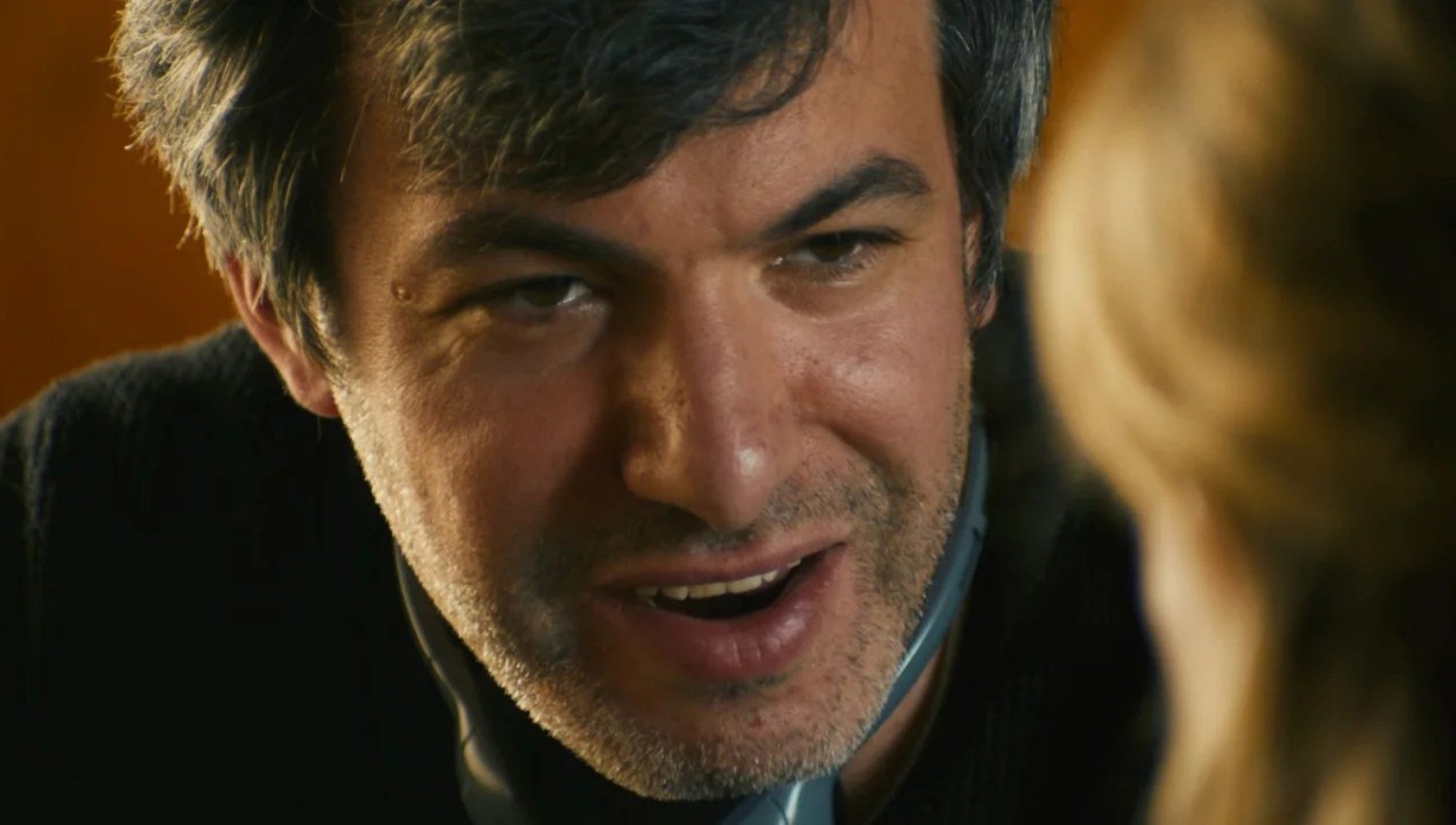

Nathan Fielder says he is still trying to understand what happened while he filmed Elizabeth Holmes for the documentary You Can See Everything, and hopes audiences can help him work it out. “I still am not sure to this day what I experienced,” Fielder said during a question-and-answer session after an A24 screening at the David Geffen Theater in the Academy Museum in Los Angeles.
Fielder co-directed the film with Lance Oppenheim, and the pair were interviewed on stage by Bill Hader. The screening took place exactly a month after the documentary premiered as a surprise at the Telluride Film Festival, and it drew a near-full house that included Zach Cregger, Adam McKay, Hannah Einbinder and Aidy Bryant. The film, which has quickly become an awards contender, opens in cinemas on 16 October.
Fielder said meeting Holmes in person before filming began was disorienting because she came across as so sincere. The former Theranos founder, who was sentenced to 11 years in prison for fraud, had not given interviews or appeared on camera for around seven or eight years. The project began after Oppenheim, an admirer of Fielder’s work, contacted him about collaborating. Fielder turned down several ideas before the subject emerged during a visit to the Magic Castle in Hollywood, when a patron called out Holmes’s name during a close-up magic act. Oppenheim had learned the day before that Holmes and her partner, Billy Evans, had approached A24 about documenting her final days before prison.
A24 agreed to fund filming with the couple even if no finished film resulted. Most of the footage was shot in 2023, with the arrangement confirmed less than two months before Holmes began her sentence. A crew of seven, including cinematographer David Bolen, worked on the project, and Fielder stayed in the couple’s guest house for about 35 days. Oppenheim said the team bought a $10 bug detector to check whether Fielder’s room had been wired, though it found nothing.
Fielder said he offered several times to leave when situations became tense or emotional, particularly as the couple had two young children, but Holmes and Evans declined each time. The directors said they often disagreed about what they had witnessed, as did the crew, even over everyday moments. Rather than resolving those differences, they came to see them as material worth exploring, which shaped the film’s approach to its subject.