
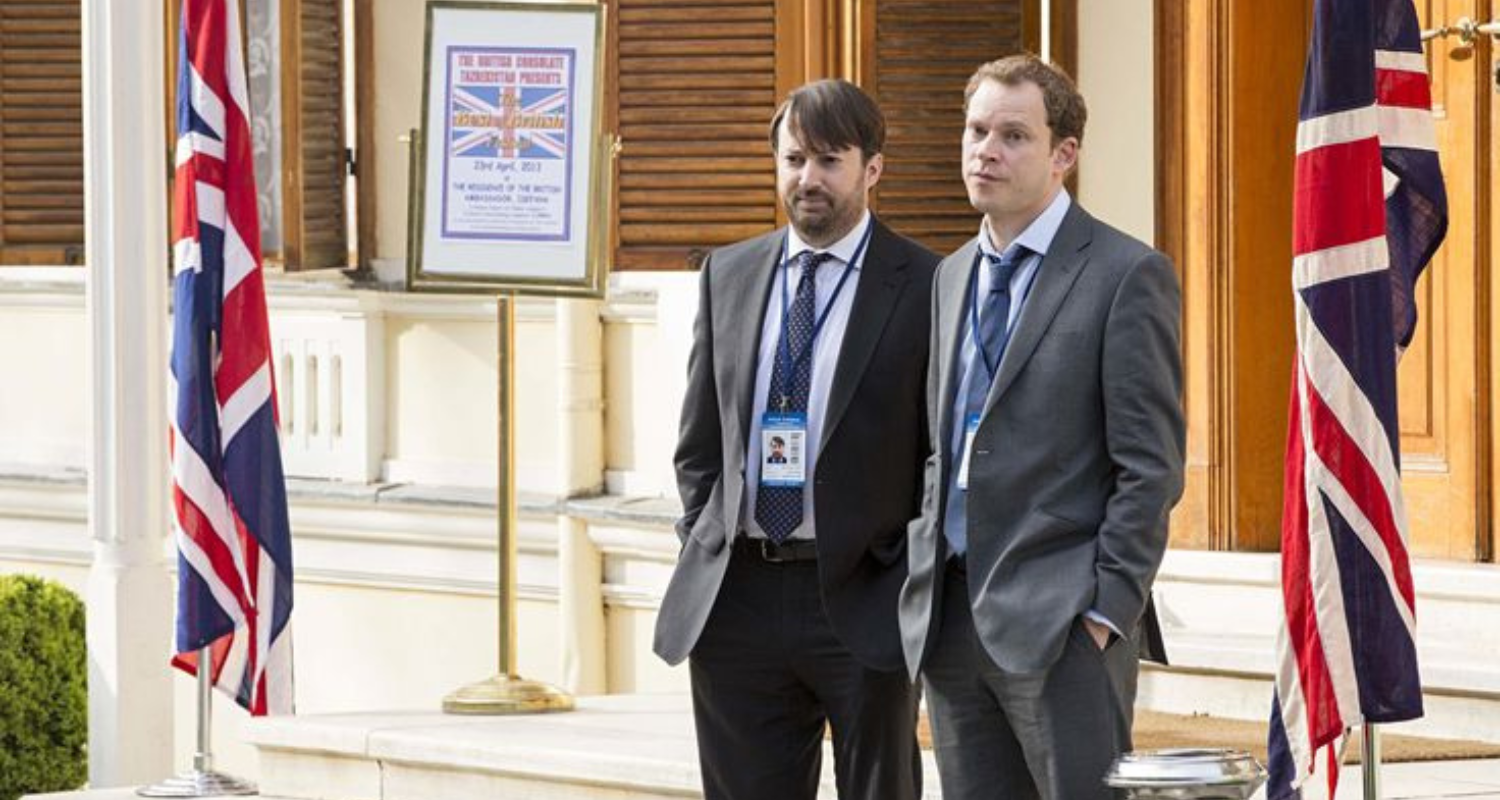

The return of That Mitchell and Webb Look to BBC iPlayer should have been a straightforward celebration of a much-loved British comedy partnership. Instead, its anniversary release has reopened a familiar but increasingly complicated question: what happens when comedy made for one cultural moment is judged by another?
The BBC’s decision to omit 11 sketches from the re-release has put David Mitchell and Robert Webb at the centre of a debate that extends far beyond two performers. The removed material reportedly included scenes involving blackface, a parody of racism and other jokes that the broadcaster concluded no longer worked for today’s audience. The decision has stirred predictable arguments about censorship, context and whether intent should outweigh impact.
A Comedy Legacy Under Review
Mitchell and Webb built their reputation on intelligent absurdity. Their work often presents a ridiculous premise with absolute seriousness, inviting viewers to laugh at self-delusion, bureaucracy, bad faith and the alarming ease with which ordinary people rationalise terrible behaviour. Their most famous sketch, in which two Nazi officers slowly recognise the implications of the skulls on their uniforms, endures because it skewers moral blindness rather than merely presenting villains for shock value.
That makes the current moment especially awkward. The pair’s comedic signature has long involved putting offensive language, assumptions or behaviour in the mouths of characters who are plainly foolish. The joke is often aimed at prejudice itself. Yet satire is never received in a vacuum. A sketch may make its anti-racist intention clear to one viewer while another sees an image with a painful history and concludes that the framing does not lessen its effect.
The dispute, then, is not simply about whether Mitchell and Webb were “allowed” to make certain jokes two decades ago. It is about whether audiences, broadcasters and performers have a responsibility to reassess how old material circulates when it is newly presented to a mass audience.
Intent Is Only Part of the Story
Defenders of the removed sketches have argued that the material was satirical, not discriminatory. In one reported scene, the performers portray historical re-enactors who attempt to recreate a conflict in the Democratic Republic of Congo, repeatedly questioning whether the exercise is racist before reaching the obvious conclusion that it is. The intended target appears to be the self-satisfied ignorance of people who believe they can borrow another culture’s trauma without consequence.
But intent cannot settle every argument. Comedy relies on shortcuts: an image, accent, costume or phrase that the audience recognises immediately. Those shortcuts can carry cultural baggage that outlives a sketch’s original purpose. Blackface, in particular, is tied to a long history of racist entertainment and exclusion. For many viewers, that history is not cancelled out because the performers intended to mock racism rather than people of colour.
This does not mean every disputed joke should be interpreted in the harshest possible way. It does mean that a comedian’s intention is one part of a larger equation. The audience’s experience, the platform distributing the work and the social context in which it reappears all matter too.
The Broadcaster’s Difficult Calculation
The BBC’s position is less dramatic than the rhetoric surrounding it suggests. The corporation did not erase Mitchell and Webb from public memory, nor did it remove the show entirely. It selected the sketches it believed still worked and left out material it and the programme makers considered unsuitable for the current release. The best-known Nazi sketch remains available, a useful reminder that the decision was selective rather than a wholesale rejection of the duo’s work.
Even so, editorial decisions by major broadcasters carry symbolic weight. When a public institution removes older content, critics can reasonably worry about a narrower cultural record and an impulse to treat discomfort as danger. Television archives are not merely collections of successes. They also show how attitudes, language and industry standards have changed.
Yet the opposite choice has consequences as well. Reissuing every sketch without reflection can imply that platforms have no responsibility for the material they actively promote. An archive is not neutral once it is placed prominently before a contemporary audience. The BBC is not only preserving a programme; it is deciding what it wants to endorse, distribute and frame in the present.
Comedy’s Test Is Still Laughter
The healthiest response to old comedy is neither blanket condemnation nor automatic nostalgia. A sketch can be clever in construction, revealing in hindsight and still be a poor fit for republication. It can also be provocative without being cruel. The challenge is to distinguish between comedy that exposes prejudice and comedy that relies too comfortably on its imagery.
Mitchell and Webb are not comedy villains simply because some material from their catalogue has aged badly. Their body of work includes sharp satire precisely because it understands how easily people excuse their own worst instincts. The irony is difficult to miss: the comedians behind one of Britain’s most memorable sketches about recognising moral failure now find their own past work being reconsidered in public.
That does not make the debate a tragedy for comedy. It may be evidence that audiences are taking comedy seriously enough to ask what it does, whom it serves and what remains when the laugh has faded. The strongest satire has always survived scrutiny. It does not demand immunity from changing standards; it invites us to look again.