


Seven years is a long time to rebuild a life. For Nathan McAdam Freud, it has been exactly long enough to go from a southeast London courtroom to the walls of international galleries, from the earliest days of addiction and legal reckoning to a body of oil paintings now valued in the tens of thousands of pounds. All of it, every canvas and every mile, traces back to one man handing him a set of paints in a rehabilitation facility.
That progression is not incidental. It is the product of seven years of sustained discipline, structured creative output, and a deliberate decision to convert personal adversity into something measurable, documented, and lasting. FREUDINC LTD, the company Freud founded and registered on 30 January 2026 under Company No. 17004465, is the formal structure around a body of work that had been accumulating long before the paperwork was filed. The 3,600 percent return on that original £500 sale over six years is the kind of figure that draws attention in any market. In the fine art world, where provenance and story carry weight alongside technique, it holds particular significance.
The origin of that story is specific and documented. A court in Camberwell directed Freud, then a dropout and an addict from Bermondsey and Peckham in southeast London, to a rehabilitation centre. There, a soldier from Inverness named David Skinner handed him paints, pens, and paper with a single instruction: use your mind. Skinner later took his own life, and it is that loss, carried forward without embellishment or evasion, that gives FREUDINC its underlying gravity. Freud has been clean for seven years. The work he makes does not obscure that fact. It depends on it.
A Market Built On Authenticity
The fine art market rewards scarcity, provenance, and narrative, and FREUDINC offers all three in verifiable form. Freud’s development as a painter since that first oil sale has been continuous and commercially validated. Collectors whose willingness to pay reflects genuine confidence in the work’s lasting value have driven the appreciation that now defines his market position. His published book of poetry, available on Amazon, extends that creative identity into a second medium, reinforcing a practice that moves across painting, writing, endurance sport, and mentorship without losing focus.
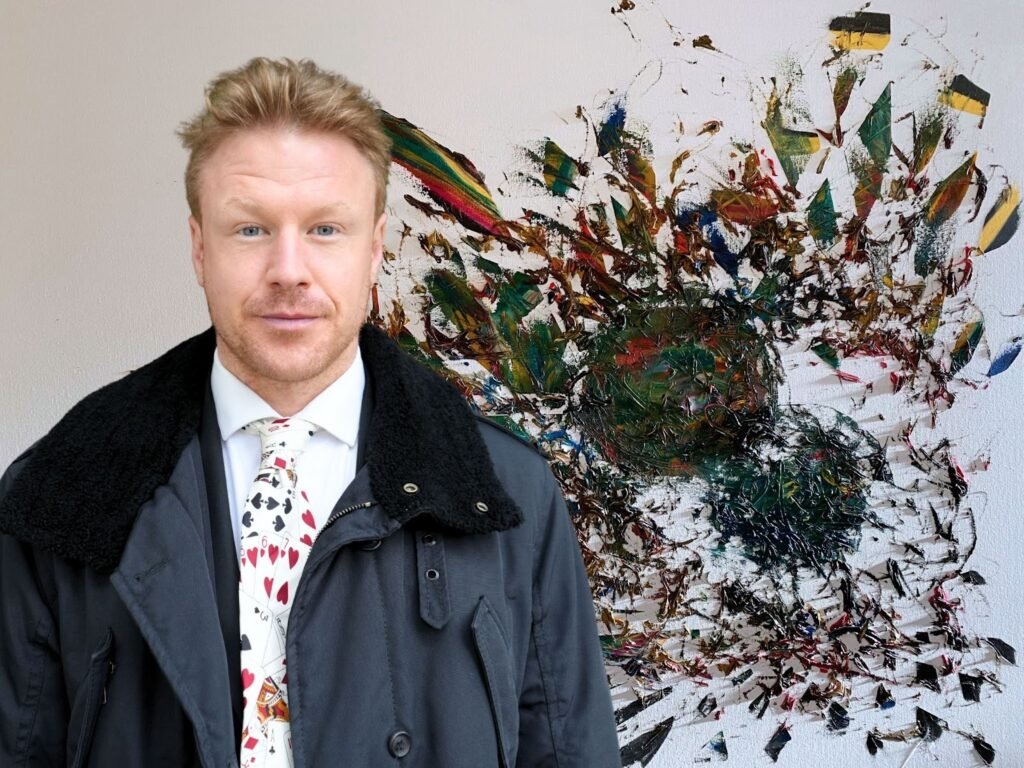
Photo Courtesy of Nathan McAdam Freud
The evaluation panel that assessed FREUDINC’s application used the Rasch model, a psychometric framework that constructs a linear measurement scale to allow precise comparisons across applicants in different disciplines. The result was a score of 5 across all six dimensions: originality and creativity of work, international recognition and exhibitions, influence on artistic trends or movements, cross-cultural impact, innovation in artistic techniques or mediums, and preservation or evolution of cultural heritage, indicating world-class standing. FREUDINC received a 2026 Global Recognition Award on the strength of that evaluation. Alex Sterling, a spokesperson for Global Recognition Awards, stated, “FREUDINC LTD represents precisely the kind of achievement this award was created to recognize, a founder who turned the most difficult circumstances into a creative and commercial body of work that operates at a world-class level and gives back meaningfully to the communities that shaped him.”
The Infrastructure Behind The Story
What separates FREUDINC from comparable creative enterprises is not the emotional weight of its founding narrative alone. It is the structural consistency with which that narrative has been converted into output. Six consecutive Ironman completions, each tied to fundraising for Cancer Research UK and the Beer Harris Memorial Trust (BHMT), demonstrate the kind of sustained commitment that institutions and collectors look for in assessing whether a creative practice has longevity. These events are not adjacent to the artistic work; they are part of the same discipline that produces the paintings and the poetry.
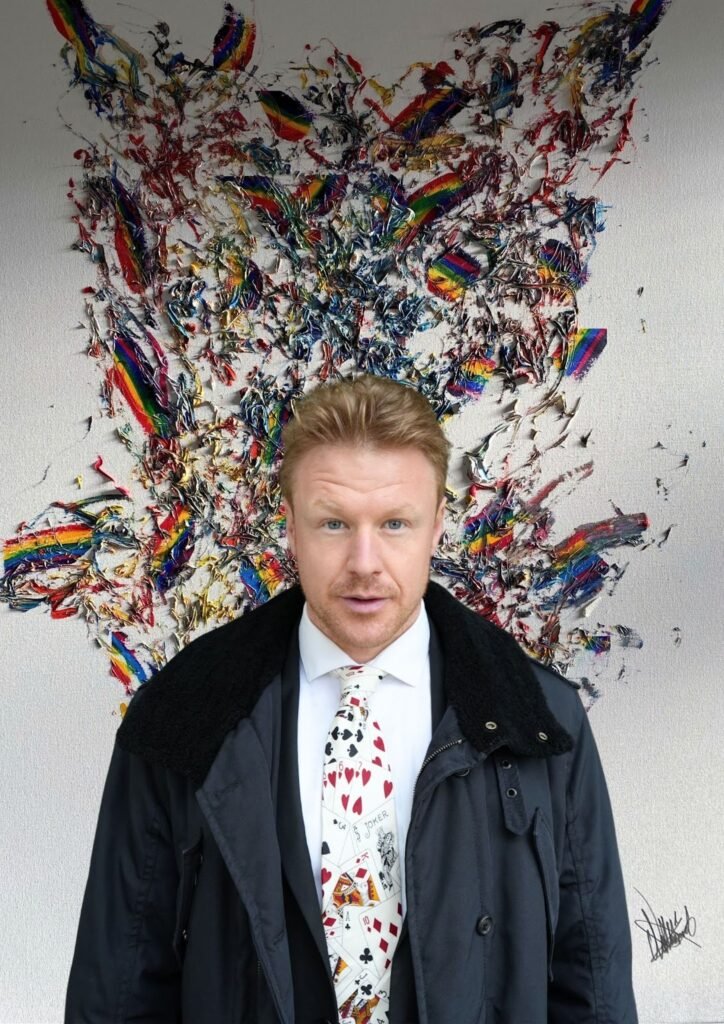
Photo Courtesy of Nathan McAdam Freud
The mentorship work carries equivalent weight. Freud has guided hundreds of individuals through addiction recovery, drawing directly on his own experience and doing so in explicit honour of David Skinner, the soldier who first placed a brush in his hand. This is not a charitable sideline. It is the connective tissue between personal history and public practice, giving FREUDINC a reach that extends into rehabilitation centres and race circuits as readily as into gallery spaces and private collections.
A Foundation Built To Last
The formal incorporation of FREUDINC in January 2026 marks the consolidation of a practice that has been building since April 2020. In the six years between that first £500 sale and the company’s registration, Freud became a published poet, an internationally exhibited painter, a six-time Ironman finisher, and a mentor to hundreds of people working through addiction recovery. Each of those roles grew from the same point of origin.
The name David Skinner belongs in this account, not as a dedication placed at the end, but as the reason the account exists at all. His instruction, given freely in a rehabilitation centre to a young man from southeast London who had run out of options, set in motion a progression that now covers galleries, race circuits, and lives across multiple countries. Every canvas Freud paints, every race he enters, and every person he mentors carries that instruction forward. The work it continues to produce makes a credible case that the most lasting creative enterprises are built not on advantage, but on the hard, specific knowledge of what it means to start from nothing and refuse to stop.