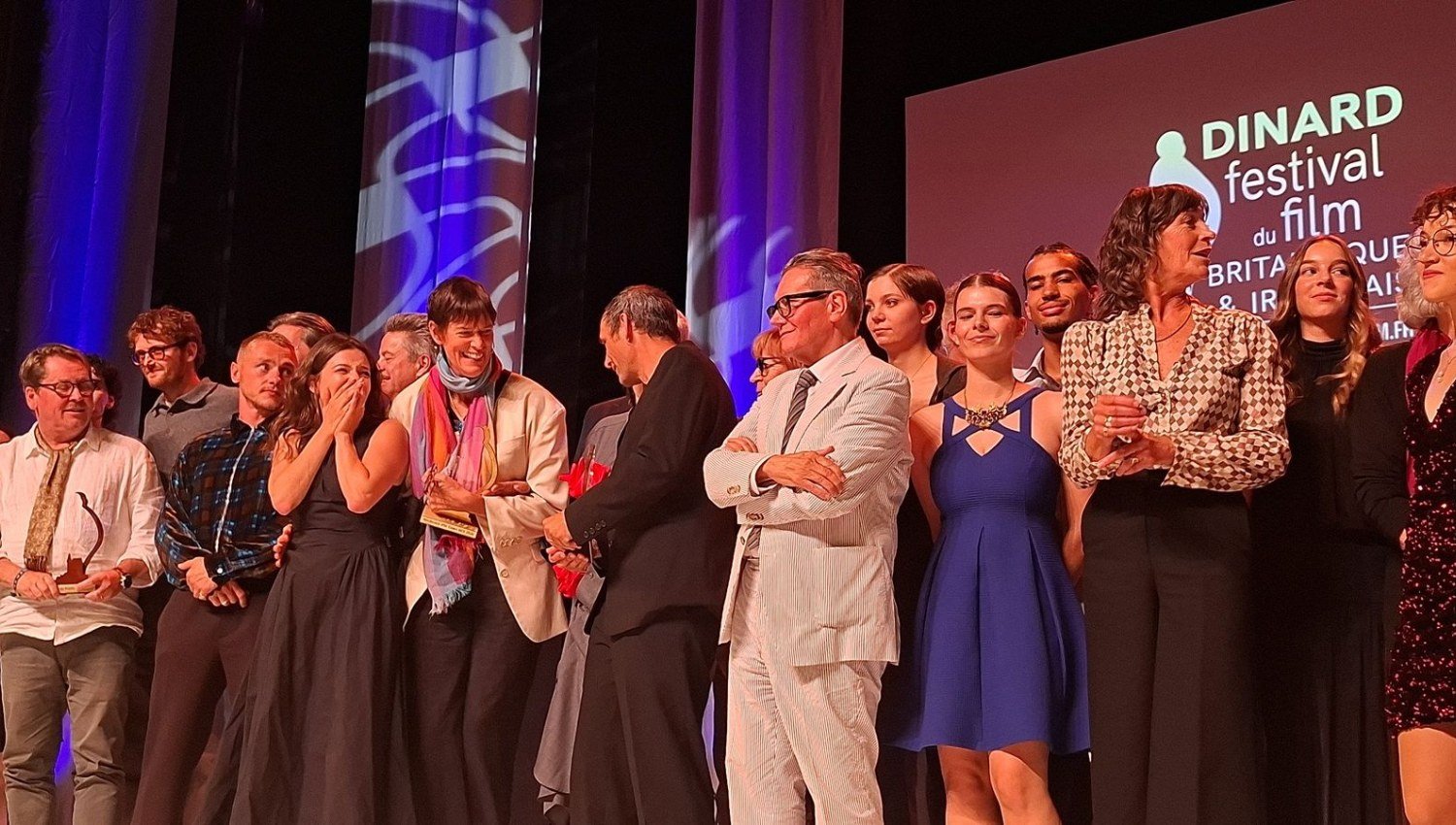

The 37th Dinard British and Irish Film Festival closed on 11 October with Clio Barnard’s I See Buildings Fall Like Lightning taking the Golden Hitchcock for best film. The awards came at a delicate moment for the Brittany event: festival director Dominique Green is leaving after seven years, and an independent review ordered by the local mayor’s office will decide how the festival continues, with findings due in early 2027.
On the evidence of this year’s winners, the programme itself remains in good health. Barnard’s film premiered in Directors’ Fortnight at Cannes, where it also won the audience award, and Dinard’s jury, led by actress Amira Casar, backed it for the top prize. Flora Nicholson and Clare Dunne shared best performance for Sophie Heldman’s The Education of Jane Cumming, a film about a 19th-century Scottish pupil who accused her teachers of lesbianism. Mark Jenkin’s Rose of Nevada took the special Barrière prize.
Audience awards went to Kieron J Walsh’s Skintown for best feature and Nicky Larkin’s Punt for best short, both Irish productions, while Olive Nwosu’s Lady won the Ouest-France Talent of Tomorrow prize. The spread of titles from England, Scotland, Ireland and Nigeria shows the festival still drawing on a wide pool of British and Irish work, and still attracting jury members of the calibre of Ben Hardy, Zoé Adjani, Thibault de Montalembert and producer Stephen Woolley.
The pressure comes from outside the cinema. Cineuropa’s report links the festival’s difficulties to shifts in both the British and French industries, including Brexit, and notes that support from industry and sponsors has fallen. A festival devoted to cross-Channel cinema depends on goodwill and money from both sides of the water, and that is harder to secure when the two industries are pulling apart. The mayor’s decision to commission an outside review signals that the town wants a clear plan before committing to the next editions.
The review’s findings will matter beyond Brittany. Dinard has long been one of the few dedicated showcases for British and Irish films in France, a role this year’s winners show it can still fill. The open questions are about money, leadership and structure rather than the quality of the films. A new director will have to address those issues once the review reports in 2027, and the result will show whether a small specialist festival can keep its place in a tighter funding climate.