
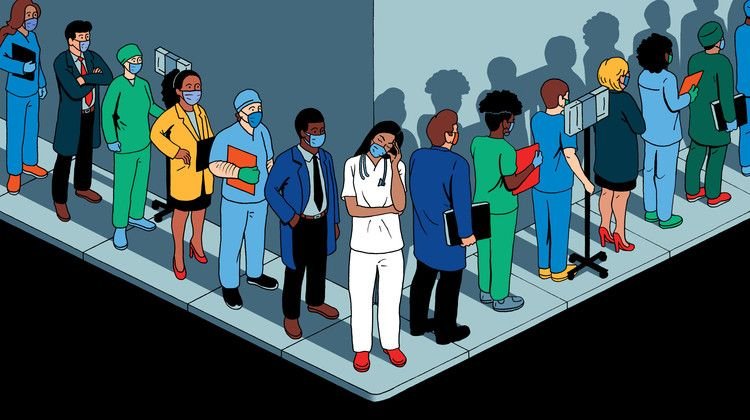

The shock of a stabbing inside a public hospital has rippled far beyond the walls of the facility, triggering a wave of public anxiety and renewed scrutiny of healthcare safety standards. What began as an isolated act of violence has quickly evolved into a broader conversation about the state of the nation’s health system and whether it is equipped to protect both patients and staff.
Eyewitness accounts describe a chaotic scene, with medical personnel scrambling to respond not only to the victim’s injuries but also to the panic that followed. Hospitals, traditionally seen as sanctuaries of care, have now found themselves at the center of a troubling narrative. For many, the incident underscores a deeper vulnerability within an already strained system.
Yet as the story unfolded, attention began to shift away from the immediate questions of hospital security and toward the political response that followed. The minister’s statements in the aftermath have become a focal point of debate, raising questions about accountability and intent.
Political Response Raises Eyebrows
In the days following the incident, the health minister addressed the public with a series of statements that emphasized broader societal issues, including crime rates and community safety. While these concerns are undeniably relevant, critics argue that the response appeared to sidestep pressing questions about hospital preparedness and systemic weaknesses.
Opposition figures and healthcare advocates have been quick to point out what they describe as a deflection tactic. Rather than directly addressing gaps in hospital security protocols or funding challenges, the narrative seemed to pivot toward external factors. This shift has fueled speculation that the government may be attempting to dilute responsibility at a critical moment.
Public trust, already fragile in the wake of ongoing healthcare challenges, now faces an additional test. The perception that leadership may be avoiding direct accountability risks deepening skepticism and undermining confidence in future reforms.
Frontline Workers Demand Clarity
Amid the political discourse, healthcare professionals have voiced their own concerns, calling for concrete measures rather than rhetorical reassurances. Nurses and doctors, many of whom have long operated under high-pressure conditions, see the incident as a stark reminder of the risks they face daily.
Several medical associations have issued statements urging the government to prioritize hospital security investments and to conduct a transparent review of existing safety protocols. For frontline workers, the issue is not abstract. It is immediate and deeply personal. The stabbing has intensified fears that their workplaces are becoming increasingly unpredictable environments.
At the same time, there is a growing sense of frustration over what many perceive as a disconnect between policy discussions and on-the-ground realities. While political narratives evolve, healthcare workers continue to navigate the same systemic challenges, often without clear guidance or support.
A System Under the Microscope
Beyond the immediate controversy, the incident has reignited broader questions about the resilience of the healthcare system as a whole. Years of budget constraints, staffing shortages, and rising patient demand have already placed significant strain on hospitals. The stabbing incident has simply brought these underlying issues into sharper focus.
Analysts suggest that moments like this often serve as inflection points, forcing both policymakers and the public to confront uncomfortable truths. Whether this leads to meaningful reform or fades into the cycle of news remains to be seen. What is clear, however, is that the spotlight is now firmly on the intersection of healthcare and governance.
As the conversation continues, the challenge for leadership will be to move beyond defensive rhetoric and toward tangible action. For many observers, the true test lies not in how the crisis is framed, but in how it is ultimately addressed.